Showing posts with label custom heating element. Show all posts

Precision Electric Heaters, Thermal Solutions, and Vacuum Feedthroughs


In the fast-paced world of high-tech industries, one-size-fits-all is a myth. BCE understands this. That's why we specialize in custom electric heaters, thermal solutions, and vacuum feedthroughs, meticulously designed to meet the exacting demands of the semiconductor, space, aerospace, packaging, analytical instrument, and medical instrument industries. BCE's custom vacuum feedthroughs ensure pristine, uncompromised connections, anchoring your operations in reliability.

Aerospace & Space, Semiconductor, Analytical & Medical Instruments, Packaging Industry


Pushing the boundaries of exploration demands tools that can withstand the challenges. BCE's products are engineered to perfection, ensuring they function seamlessly even in the harshest conditions of outer space. In industries where micrometers make a difference, BCE delivers. Our custom electric heaters and vacuum feedthroughs are at the heart of groundbreaking discoveries. From rockets to semiconductor machines to medical instruments to packaging, we design products that enhance efficiency, speed, and reliability, ensuring your packaging operations run like a well-oiled machine.

Specialized Heater and Feedthrough Solutions


Our prowess in serving diverse industries is a testament to BCE Mfg. 's engineering brilliance and commitment to innovation. Our solutions aren't just products but enablers - paving the way for advancements, discoveries, and progress.

Your Challenge. Our Solution. Let's innovate together.
Experienced Electric Heating Element Designers Speed Development Time and Save Money in OEM Product Development

Electric Heating Element Designers

The application of localized electric heating elements is one area that OEM design engineers find themselves navigating in unchartered waters. Very logically, they often attempt to use an off-the-shelf cartridge, silicone rubber, or mica heaters for their specialized heating requirement. Unfortunately, this approach compromises layout, packaging, and performance. A better alternative is considering a custom heating element developed in consultation with an experienced custom heater manufacturer.


Technology advances rapidly, and findings in material science, medicine, pharmacology, biology, and semiconductors occur daily. These advancements in technology open the door for performance improvements leading to new treatments, medications, materials, and processes. Original equipment manufacturers (OEM's) of analytical, semiconductor, biomedical, life-science, and aerospace equipment continually design new equipment to apply and leverage these new discoveries. 


Experienced custom electric heater designers provide many essential benefits throughout the product development cycle. For instance:

  • Front-end, practical design review to optimize manufacturability.
  • Timely prototype development.
  • Strong alliances with vendors.
  • Single source responsibility.
  • Testing, calibration, and QC.
  • Inventory management.
  • Value-added assembly.

The heater manufacturer partner provides:


  • Critical guidance in material selection.
  • Power requirements under load.
  • Temperature vs. time data.
  • Watt density optimization.
  • Packaging advice.


Their help provides high performance, precise fit, and extended heater life.


The pressure to produce new devices that offer greater efficiencies, compactness, and production is always present. Each item in the precedent design undergoes scrutiny and transitions to a contemporary fit, form, or function. New components are needed to meet the new design requirements. By choosing an experienced custom electric heating element design partner, the OEM gets the precision they need, plus scores of other benefits derived from the heater vendor's tacit knowledge and past experiences.


BCE

+1 510-274-1990

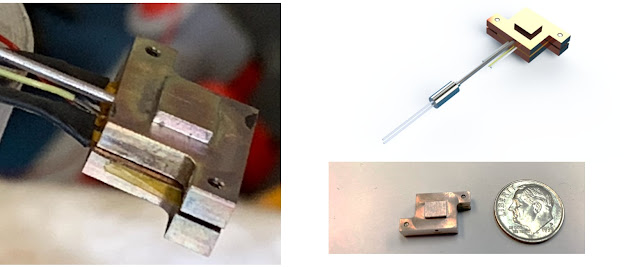
Molybdenum-Copper Stage Heater

Molybdenum-Copper Heater

BACKGROUND

A research and development company approached BCE wanting to heat a 1mm x 1mm x 0.5mm thick component. This was a very sensitive part that needed to be tested to a maximum exposure of 200°C continuous with very precise temperature uniformity for sampling purposes.

SCOPE

Molybdenum-Copper Stage Heater needed to satisfy the following:

  • Temperature <201°C
  • Internal element must be able to withstand temperature <210°C
  • A cold section was not needed
  • Molybdenum-Copper (Moly-Copper) base 65% Moly and 35% Copper
  • 12Volt, 3Watt (Max)
  • Two thermocouple type “K” external
  • M1 threads 

OUTCOME

BCE produced a highly effective assembly which reached the temperature of 200°C in under 1-Minute utilizing only 2.6 watts. Because of the low mass and high conductivity of the copper-moly base, reaching the target temperature and cooling down was highly efficient.

There were two thermocouples which were used to verify the test temperature. One was an exposed bare-bead TC 36 AWG, with the second TC being a 0.062”Ø probe style unit. The M1 threads were challenging, however our process was able to make this happen. 

GET MORE INFORMATION ABOUT THE CUSTOM MOLYBDENUM-COPPER HEATER HERE

Call BCE today for more information.
510-274-1990
https://bcemfg.com

Copper Flange Heater for Gas Chromatograph

Copper Flange Heater
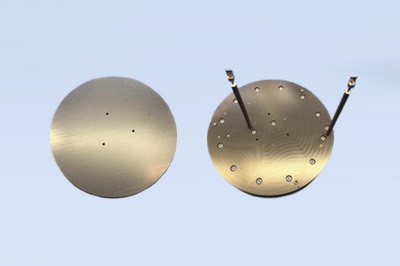
A gas chromatography application was brought to BCE involving a custom heater to ramp a cell end plate to 105°C. The customer had issues finding a solution due to the small surface area that needed to be heated (~ 0.75” diameter).  The requirement was a 25-Watt 120-Volt source, which resulted in a high resistance value (576 ohms) eliminating many heater options for this size and surface area.

Scope:
  • Heater plate to be 105°C 
  • Good temperature uniformity (+/- 1.5%C)
  • 25 W 120 V
  • 1/8” Plate thickness max
  • Geometry to allow for three tubes to exit
  • 0.75” Diameter
Outcome:

Since etched foil polyimide heaters were not an option for this application, BCE engineers designed a 110 copper plate with a rod heater welded within the groove.  The rod style heater allowed for a higher resistance value and was more robust compared to other types of heaters.  Additionally, the cold section and lead orientation can be easily modified by the customer to accommodate their assembly.  BCE’s Copper Flange Heater was able to efficiently heat the small surface and save the customer from an expensive assembly redesign.

For more information, contact BCE by calling 510-274-1990 or by visiting https://bcemfg.com

Electric Heating Elements: Cartridge Heaters

Cartridge Heater
Click for larger view.

Cartridge Heater Basics

Cartridge heaters are cylindrical in shape, consisting of an element made of resistance wire wound around a ceramic core. Within a metal sheath tube, the wound core is precisely centered and surrounded by granular magnesium oxide material. This isolates the resistance element from the tube electrically and provides a heat transfer medium to the sheath tube. At one end are electrical terminations. In order to enhance internal heat transfer and electrical insulation characteristics, higher performance, longer-lived cartridge heaters are swaged (a rotary hammer compacting process). Swaging compacts and densifies the granular insulating material, improving its thermal conductivity. Cartridge heaters are commonly used and are produced in a broad range of lengths, diameters, wattages, watt densities, lead agreements, and optional internal sensors.


Cartridge Heater Applications

Cartridge Heater
Specialized Cartridge Heater (BCE)
The following equipment utilizes cartridge heaters: chromatography equipment; medical laboratory equipment, including chemistry analyzers; plastic molds and runners; platens; barrels on extrusion equipment; hot melt glue systems; packaging seal bars; labeling and marking systems; food-warming equipment and steamers; autoclaves; ovens; photographic processing equipment.

Cartridge heaters are capable of operating at elevated temperature as well as high watt density, but care must be taken to apply cartridge heaters at appropriate watt density and sheath temperature levels.

Temperature Capability

A maximum of 1600°F (870°C) sheath temperature is recommended.

Watt Density Capability

A maximum of 400 W/in. and higher under special conditions.  As a rule, cartridge heaters can operate at 1600°F at 40W/in.

Heater Life

Operating at 1600°F internal temperature with modest cycling and with the proper hole fit, a properly designed and constructed cartridge heater will provide approximately a one-year life.

Voltage

Usually 120/240V, with 480V and custom voltages requiring special design or sizing considerations.

Thermal Response/Application

Cartridge heater's thermal response is dependent on conductive heat transfer in most applications.  Optimum conduction requires close fit between the heater and the work to be heated. As heater looseness increases, watt density must be decreased accordingly, to prevent internal overheating. Watt densities of liquid-immersion cartridge heaters vary according to the liquid's viscosity and heat capacity.  When heating liquids, care must be taken to prevent "film boiling" where vapor bubbles create a thermal insulating effect and raise the heaters internal temperatures.

Heater Efficiency

Cartridge heaters are 100% efficient when immersed.

For more information about electric heating elements, contact BCE by calling 510-274-1990 or by visiting https://bcemfg.com.

Custom Engineered Extrusion Die Heater Reduces Downtime, Increases Production

Extrusion Die Heater
Extrusion plays an important role in the plastics industry. Unlike molding, extrusion is a continuous process that can be adapted to produce a wide range of finished or semi - finished products, including pipes, profiles, sheets, film and wire covering. Extrusion machines are fitted with a variety of dies.

Dies often require external heating to keep the plastic viscous. This is accomplished by using electric cartridge heaters inserted in holes in the die, or by other custom electric heating elements that are mounted to the die.

APPLICATION

A plastic extrusion customer approached BCE with a problematic heater that, upon its failure, would render the entire line out of commission. Not only did the failed heater stop production, but it also was difficult and time consuming to replace.

After reviewing the application, BCE engineers quickly determined the heater was designed as a consumable part with limited operational life, and little to no serviceability. BCE was going to have to design a replacement heater that would not only be a drop-in retrofit, but would be built to last and easy to replace if needed.

SCOPE
  • The heater needed to satisfy the following criteria: 
  • Continuous operating temperature of 200 °C.
  • Minimal temperature deviation: ±2 °C.
  • 10-32 tapped holes for custom terminal enclosure.
  • Compatible with proprietary mounting fixture.
  • Robust heater design to support long term continuous heating at 480 V in series .
  • Heater plate designed for ease of access and serviceability.

OUTCOME

After generating all the necessary drawings and 3D models, BCE’s engineers successfully designed and manufactured a circular custom heater assembly to replace the customer’s original part. Custom tubular heaters were embedded into a machined aluminum ring. The positioning of the heater terminals were key to the ease of replacement and had to be carefully engineered.

With this new, improved design, BCE was able to increase heater performance and efficiency, as well as  guaranteeing  temperature uniformity to within 2 °C around the periphery. Additionally, BCE modified the heater terminal electrical insulation to adequately support 240V (480V in series). Finally, the aluminum ring enclosure was designed to allow fast and easy replacement of the tubular heating elements, reducing down time and lost production.

For more information, contact:
BCE
https://bcemfg.com
510-274-1990

Electric Heating Element Design: Nichrome Wire

Nichrome wire heater element
Nichrome wire heating element inside a quartz tube.
(Image courtesy of Wikipedia)
When an electric current passes through a conductive material (a resistor) energy in the form of heat is released. The greater the resistance to electron flow, the greater the heat energy created. The terms resistance and conductance apply to the nature of the conductive material, and it's ability to pass current.

Resistance (measured in ohms and using symbol "R") is defined as the electrical voltage (in volts using symbols "V") divided by the current (in amps, using symbol "I"), or R=V/I. This formula is one variant of Ohm's Law.

The heat, or power, released from the resistor (measured in watts, using the symbol "P") is a function of the supply voltage squared, divided by the conductor resistance. This version of Ohm's Law looks like this: Watts = Voltage squared / Resistance, or P=V2/R.

You can see if the resistance is too high, voltage does not flow, and no heat is produced. For the benefit of simplicity, we'll forego a discussion into superconductors, like those used on MRI machines and mass spectrometers, because their behavior includes complicated magnetic field discussions. Instead, we'll stick to common conductors often used to pass electrical current.

Selecting the right resistive material for a heating element is crucial in order to maximize heat output, heater longevity and energy usage - a conductive material with high resistance that is also easy to work with.

Nichrome alloy, made up of 80% nickel and 20% chromium is by far the most popular resistance heater wire, and is a available in a wide variety of wire gauges and ribbon shapes. It's popularity is performance based - it has high resistance, is easy to apply to many heater configurations, does not oxidize, has a low expansion coefficient and a high melting point. In the design and development of electric heating elements, if you grant that nichrome wire is at the heart of most electric heaters, everything else comes down to packaging and performance.

While there are other materials such as Kanthal (iron / chromium / aluminum) and Cupronickel (copper / nickel), and newer exotic ceramics, the vast majority of electric heaters used in industrial, commercial, OEM, and consumer goods all still rely on the ubiquitous and time proven nichrome alloy.

For more information on electric heating elements, contact BCE by visiting https://bcemfg.com or by calling (510) 274-1990.

Custom Electric Heating Elements Provide OEM Designers Freedom and Flexibility

Custom Electric Heating Element
Custom heater for vacuum
applications
with thermowell
and multiple RTD sensors.
Technology advances rapidly and new discoveries in material science, medicine, pharmacology, biology and semiconductors are being made every day. Along with these advancements in  technology comes new treatments, medicines, materials, and processes.

Original equipment manufacturers (OEM's) of analytical, semiconductor, biomedical, life-science, and aerospace equipment continually design new equipment to apply and leverage these discoveries. Pressure to produce new machines offering greater efficiencies, compactness, and greater production is always present. Each item in the precedent design undergoes scrutiny and very often has be modified to a new fit, form, or function.  New components are needed to meet the new design requirements.

The application of localized electric heating elements is one area that OEM design engineers find themselves navigating in unchartered waters. Very logically, they often attempt to use an off-the-shelf cartridge, silicone rubber, or mica heaters for their specialized heating requirement. Unfortunately this approach leads to compromises in layout, packaging, and performance. A much better alternative is considering a custom heating element, developed in consultation with an experienced custom heater manufacturer.

Custom Electric Heating Element
Custom semiconductor wafer
chuck heater
. Highly uniform heat
with no brazing or casting. 
Experienced custom electric heater designers provide many important benefits throughout the entire product development cycle. For instance:
  • Front-end, practical design review to optimize manufacturability.
  • Timely prototype development.
  • Partnerships and alliances with platers, brazers, casters and heating element manufacturers.
  • Single source responsibility.
  • Testing, calibration, and QC.
  • Inventory management.
  • Value-added assembly.
Custom Electric Heating Element
APCI Heater/Capillary Source Heater
400 deg. C, connector
plug, and internal RTD sensor.
The heater manufacturer partner provides critical guidance in areas such as material selection, power requirements under load, temperature vs. time data, watt density and packaging. With their help, high performance, precise fit, and long heater life are better ensured.

By choosing a custom electric heating element design, the OEM gets exactly what they need in terms of form, fit, and function plus scores of other benefits derived from the heater vendor's tacit knowledge and past experiences.

FAQ: Custom Heater Assemblies

Custom Heater Assemblies
Custom heater assembly that includes a sealed cartridge
heater, thermowell, and thermocouples (multiple).

What is a custom heater assembly?

In general terms, a custom heater assembly is a device that transforms electrical current to heat energy, is designed in a way that accommodates the needs of a unique heating requirement, and is used for the heating of gases, liquids, plastics, or metals.

What is a thermowell?

A thermowell is machined metallic tube used to house and protect sensors or heating elements. Thermowells not only protect heaters and sensors from erosive or corrosive media, they also allow for easy removal and replacement without exposing the process media.

What is a cartridge heater?

A cartridge heater is a cylindrically shaped electric heating element intended to be inserted in holes in metal platens or immersed in flowing media. The design incorporates a ceramic bobbin wound with nichrome resistance wire, carefully centered inside a metallic tube, and then backfilled with magnesium oxide (MgO), which provides electrical insulation. Cartridge heaters can be either swaged (compacted MgO) or un-swaged (loosely filled MgO). Swaging allows for maximum heat transfer to outside surfaces while keeping internal heater temperatures as low as possible, and preserving dielectric qualities.

What is a sealed cartridge heater?

A sealed cartridge heater incorporates all of the characteristics of a standard cartridge heater but is additionally sealed with BCE’s proprietary epoxy seal making it vacuum compatible. The seal additionally elongates heater life, especially in high humidity and moisture environments.

What electrical tests are performed on heaters?

Heaters undergo 3 main electrical tests: Resistance, MegOhm and Hipot.

A resistance test is performed using a fluke meter to ensure that the heater is manufactured within the correct tolerances of the electrical specifications. Heater leads are connected directly to the fluke meter leads to perform the test.

A MegOhm or Insulation Resistance test is performed using a megohmmeter. As its name implies it tests for any breakdown in a heater’s insulating material. The test is performed by supplying low to medium voltage to the insulating material for a small period of time.

A Hipot test is also used to assess the dielectric strength of the heater’s insulating material. In addition to performing a Dielectric Withstand Test like the Megohm, it can also perform a Dielectric Breakdown Test. This means that the heater insulating material is shocked at very high voltages until failure is achieved. This is more commonly performed on samples as it destroys the heater.

What is a thermocouple?

A thermocouple is a thermoelectric device that measures temperature. When the wire junction of its two dissimilar metals changes in temperature, a small voltage is created. The voltage is then used to calculate the temperature using the thermocouple’s reference table.

What is an RTD?

RTD stands for "resistance temperature detector". It is generally constructed of a fine and pure metallic wire wound around a ceramic or glass core. The relationship between wire resistance and temperature is used to sense the temperature of other devices.

BCE’s Submersible Heater: Transforming Ozone Sanitization Technology

Disinfecting water in residential and commercial applications has always been at the core of public safety. An efficient way to eliminate pollutants from water bodies is through the creation of ozone by the means of sophisticated equipment. In order to enhance the performance of existing ozone generators, a large multinational approached BCE to provide specially engineered heaters capable of continuous operation while being submerged in a fluid. It was thus imperative for the heaters to be hermetically sealed and easy to install into the existing ozone generating assemblies.


SCOPE
  • Operate at 240V
  • 10W power consumption
  • Easy assembly into threaded connectors
  • Heater cartridge not to exceed 7" in length
  • Heater diameter not to exceed .5"
  • Robust stainless steel construction
  • Operate at temperatures exceeding 200°C
  • Hermetic seal for increased efficiency
  • 10" Lead length
  • Leads capable of withstanding 500°C
OUTCOME

BCE supplied the company with submersible heaters meeting all of the geometric and electrical requirements. The heaters incorporated a 316 SS, ¼" NPT fitting at the tip allowing assembly into existing devices and preventing oxidation. Furthermore, all heaters were hermetically sealed with the BCE proprietary epoxy seal meeting the NASA ASTM E595 Low outgassing specification. The heater body was constructed of stainless steel as well for increased durability. Moreover, the leads were all fiberglass insulated to meet necessary temperature requirements and were exactly 10" long as specified for the application.

Custom Heating Element for Lab Mice Stabilization During MRI

Custom electric heating element for laboratory
Custom electric heating element developed for keeping
mice warm during MRIs.
Cancer researchers in the UK have developed a special electric heating system to keep lab mice warm during MRI's without electromagnetic radiation effecting the quality of the MRI.

Compatibility between MRI machines and resistive, electric heaters has been a challenge to manufacturers of heating devices. MRI's and electric heaters don't like each other because of the electromagnetic field given off by DC and standard AC voltages. That E/M field disturbs the image resolution and quality of the MRI.

In research and lab testing, mice and other rodents are examined via MRI technology. In order for the rodents to be compliant with the testing procedure, the mice are given anesthesia which lowers their body temperatures and can send them into hypothermia. In the past, this situation was corrected by warming the air around the animal sufficiently to warm their body. Air heating requires a significant amount of valuable space, so a different heating source that would both not conflict with the MRI output and also provide a more compact, economical solution was required.

While DC voltages and standard AC voltage caused problems with the MRI, the solution turns out to be a copper wire element, embedded in heating blanket, and powered by AC voltage in a frequency ranging between 10-100 kHz. 

Conclusion

High frequency electrical heating provides a simple means by which stable body temperatures can be maintained in the mouse. The space requirement for the heating apparatus around the mouse is minimized and the system can be extended to use arbitrarily shaped resistor systems. Image and spectral quality are not adversely affected by the presence of the AC used in the heater so MRI performance is not compromised. As such a new MRI-compatible mouse heating system has been developed and validated.

To read the entire article, An MRI-Compatible High Frequency AC Resistive Heating System for Homeothermic Maintenance in Small Animals, visit this link.

Rapid Response Electric Heaters Designed for Clean Gases and Liquids

Mini Clean Flow Heater
In advanced technologies such as analytical, biomedical, pharmaceutical, aerospace, electronics and laboratory applications, special purpose electric heating elements are required for heating high purity fluids and gases. These applications require rugged design, fast heat-up, tight control, high temperatures and the ability to withstand exposure to harsh solvents and corrosive gases. They also must be constructed in a way to prevent contamination of the process media.

The use of standard screw plug immersions heaters, screwed into a stainless steel welded vessels (known as circulation heaters) are almost always a misapplication for these unique requirements. Circulation heaters create more problems due to leaks, material compatibility, poor controllability, and bulky size.

BCE, a northern Californian manufacturer of custom heating elements offers it's Mini Clean Flow Heater specifically for these applications. These heaters are designed for heating "clean" liquids and gases normally found in fuel cell, bio-med, laboratory, food, semiconductor and pharmaceutical applications.

The Mini Clean Flow Heater operates in a liquid or gas stream providing very fast response times and accurate control capability.

The heating elements in the Mini Clean Flow Heater are isolated electrically from the process media, protecting them from contaminants and providing long life.

Summary:
  • Designed for heating of clean gases or liquids
  • Gas flow passes over an enclosed heated body; not exposed to resistive elements (Nichrome)
  • All parts exposed to gas flow are constructed of 304 stainless (other material available)
  • High temperatures
  • Custom wattages, voltages, inlet and outlet fittings (NPT, SAE, BSP &VCR) are available.
  • Made in U.S.A.

For more information, visit http://heater.belilove.com

Welcome to BCE

BCE (Belilove Company-Engineers) has over 60 years experience as a California based manufacturer, value added component integrator, and distributor serving the analytical instrumentation, semiconductor, photovoltaic, medical equipment, plastics processing, foodservice equipment, packaging, and aerospace industries. 

BCE offers custom electrical heaters, sensors, controls and custom vacuum feedthroughs for sale. Supported by their wealth of knowledge and experience, BCE will assist you with your electric heating, vacuum feedthrough, and ceramic substrate needs.

http://www.belilove.com | (510) 274-1990

Thermal Solutions Designed for Aerospace

Advanced electric heating elements and thermal systems designed and manufactured for application-specific requirements in the harsh operating environment of outer space.

Experience, precision, and reliability. BCE.

http://heater.belilove.com | (510) 274-1990

Custom Electric Heating Elements

BCE designs and manufactures custom engineered heating solutions for analytical instrumentation, semiconductor, photovoltaic (solar), medical equipment, plastics processing, foodservice equipment, packaging, aerospace and many other industries.

Visit http://heater.belilove.com or call (510) 274-1990.

Need a Custom Design Electric Heating Element? Call Your Local Heating Element Sales Rep

Your Local Heating Element Sales Rep is Your Friend
Your local heating element sales rep is your asset.
Many design engineers at original equipment manufacturers (OEMs) may overlook a huge asset when designing a new piece of equipment requiring an electric heater. The local heating element sales representative.

Custom heating element design is best completed and accomplished through the proper application of the right resources. The local heating element sales engineer is an access point to high level technical knowledge and assistance that can be easily tapped and brought to bear on your successful task or project completion.

Local heater and control distributors and representatives provide services that will help you save time and money, with a greater chance of achieving a better outcome for the entire project. 

Consider these points regarding what the heating element sale rep brings to your project:
Custom heating element design
Example of custom heating element
(ceramic airflow heater)
  • Product Knowledge: The heating element sales rep will be current on product offerings, proper application, and capabilities. They also have information regarding what products may be obsolete in the near future. This is an information source at a level not generally accessible to the public via the Internet. 
  • Application Experience: As a project engineer, you may be treading on fresh ground regarding some aspects of your current assignment. There can be real benefit in connecting to a source who has decades of designing electrical heating elements. 
  • Access: Through a heating element sales rep, you may be able to establish a connection to “behind the scenes” manufacturer contacts who will champion your project internally. The rep knows people, makes it his/her business to know the people that can provide answers, and can act as your projects ambassador with the manufacturer.
Certainly, any solutions proposed are likely to be based upon the products sold by the representative. That is where considering and evaluating the benefits of any proposed solutions become part of achieving the best project outcome.

Develop a professional, mutually beneficial relationship with a heating element sales rep. Their success is tied to your success and they are eager to help you.