Showing posts with label BCE. Show all posts

Custom Engineering Solution: Custom 300mm Vacuum Puck Heater

Custom 300mm Vacuum Puck Heater

Optimizing Thermal Uniformity at 400°C Under Severe Spatial Constraints


Executive Summary

A leading semiconductor fabricator faced critical yield losses due to thermal non-uniformity and severe physical footprint limitations within their vacuum deposition chamber. The legacy incumbent heating assembly was too thick and featured an overly bulky vacuum feedthrough design that interfered with internal mechanics.

Engineering delivered a custom, low-profile 300mm Vacuum Puck Heater utilizing 304 Stainless Steel (304SS) and a novel vacuum side-mounted flange design. 

The solution achieved a +/- 1.5⁰C   thermal uniformity profile at 400°C, maintained high-vacuum integrity at 5 x 10 ̄⁹ and eliminated chamber interference, and increased operational throughput by 14%.

Technical Challenges
  • Spatial Limitations: Standard bottom-mount heating assemblies interfered with existing lower-chamber robotic substrate handling mechanisms.
  • Incumbent Failure: The competitor's part was physically too thick, and its large vacuum feedthrough footprint blocked critical internal clearances.
  • Thermal Target: The process required a continuous, stable operating temperature of 400°C.
  • Uniformity Metric: Strict process windows demanded a total thermal variance of less than 3% across the entire 300mm substrate surface.
  • Vacuum Integrity: High-vacuum compliance required low-outgassing materials capable of operating continuously at 5 x 10 ̄⁹ without structural deformation.
The Engineering Solution

Technical parameter Legacy incumbent / competitor limitation BCE custom engineering solution Quantified technical & operational benefit
Physical profile / thickness Assembly too thick; blocked critical internal clearances Ultra-low profile 300mm puck design 100% clearance of vertical zone beneath the puck; zero robotic interference
Vacuum feedthrough design Overly bulky footprint; interfered with lower-chamber robotics Proprietary, ultra-compact side-mounted flange assembly Single minimized custom side port routing; completely bypasses bottom clearance traps
Thermal uniformity at 400°C High thermal variance causing critical wafer yield losses Multi-zone, high-density resistive heating element layout Achieved +/- 1.5°C thermal uniformity
Vacuum leak integrity Outgassing and deformation issues under high vacuum Stress-relieved 304SS body with custom fittings Maintained stable ultra-high vacuum environment at 5 × 10⁻⁹
Operational efficiency Slow stabilization times and mechanical interference bottlenecks Optimized thermal ramping and reliable mechanical clearances 14% increase in overall operational throughput

Custom 300mm Vacuum Puck Heater

Advanced Material Selection
Engineers selected 304 Stainless Steel (304SS) for the low-profile puck body. This material provides an optimal balance of thermal conductivity, high mechanical strength at 400°C, and excellent corrosion resistance under vacuum conditions. 

Ultra-Compact Vacuum Side-Mounted Flange

To bypass the bottom-chamber clearance restrictions and overcome the competitor's bulky layout, engineering designed a proprietary side-mounted flange assembly. This ultra-compact configuration routed all electrical feedthroughs and internal thermometry horizontally through a single minimized custom side port.
  • Footprint Reduction: Cleared 100% of the vertical clearance zone beneath the puck by eliminating excess thickness.
  • Vacuum Integrity: Maintained a stable environment at 5 x 10 ̄⁹ using custom vacuum fittings.


How ISO 9001 Protects BCE’s Leadership in Electric Heaters and Vacuum Feedthroughs

ISO 9001

Belilove Company-Engineers (BCE) in Hayward, California, has built its reputation on precision manufacturing, engineering depth, and the ability to solve complex thermal and vacuum-related challenges. As a long-standing producer of electric heating elements and vacuum feedthroughs, BCE occupies a place in industrial supply chains where reliability, consistency, and documented process control are not just helpful—they are essential. In 2025 and for the foreseeable future, maintaining ISO 9001:2015 certification remains one of the most important strategic decisions the company can make. 

Although the manufacturing world is evolving rapidly through automation, digital quality systems, and advanced analytics, ISO 9001 remains the universally recognized foundation for quality management. For a company like BCE, whose customers depend on stable, traceable, and repeatable performance, ISO certification strengthens trust at a time when supply-chain expectations are higher than ever.
ISO 9001:2015 still acts as a global signal that a manufacturer operates with discipline and accountability. Many OEMs will not even consider a supplier unless that certification is in place. 

Because BCE supports industries that require high reliability—from semiconductor tools and analytical equipment to aerospace, medical, research, and industrial heating systems—its ISO certification remains a powerful indicator of competence. Customers evaluating heating elements or vacuum feedthroughs want assurance that temperature uniformity, material purity, electrical integrity, and hermetic seals are backed by documented processes rather than informal know-how. ISO 9001 ensures that BCE’s work is systematized, audited, traceable, and continuously improving. Even as quality tools evolve, this formal validation of process control continues to influence purchasing decisions across technical and regulated markets.

In practical terms, ISO 9001 provides BCE with a structural advantage that goes far beyond paperwork. It reinforces a culture in which calibration, machining accuracy, weld integrity, inspection methods, and supplier management are carefully monitored and reviewed for improvement. This matters tremendously in the world of electric heaters, where design tolerances and watt-density calculations must be exact to achieve stable, safe thermal performance. It is equally vital in vacuum feedthrough manufacturing, where every brazed joint, insulator, conductor, and sealing surface must perform flawlessly in environments that may involve extreme temperatures, high voltages, or deep vacuum. ISO 9001 amplifies BCE’s engineering expertise by ensuring that every step of production is executed within a disciplined system that reduces variation and improves long-term reliability.

Looking ahead, BCE’s ISO certification will become even more valuable as digital quality tools continue to reshape manufacturing. Customers are increasingly evaluating suppliers not only on the final product but on the integrity of their entire data trail. They want to know how non-conformances are analyzed, how corrective actions are documented, how supply chain risk is managed, and how process improvements are implemented over time. ISO 9001 has already begun shifting toward these data-driven expectations, and future revisions will likely place even greater emphasis on traceability, risk management, and real-time process feedback. BCE’s decision to maintain certification positions the company to integrate seamlessly into these next-generation quality ecosystems. It signals that BCE is prepared not only to meet today's specifications but also to adapt to emerging customer requirements and industry standards as they evolve.

While some lower-complexity manufacturing sectors are seeing customers relax ISO requirements, the opposite is happening in the specialized markets BCE serves. As electric heaters and vacuum components become more customized and application-specific, manufacturers must demonstrate increasing levels of quality control. That expectation is amplified by the broader shift toward automation, electrification, and miniaturization across industry. Companies building advanced scientific instruments, semiconductor equipment, medical devices, and energy systems cannot afford component failures. They also cannot afford suppliers who lack documented systems that ensure consistent output. BCE’s ISO certification is therefore a critical part of its value proposition because it protects customers from risk at a time when supply chains are under constant scrutiny.

Maintaining ISO 9001:2015 is not just about compliance or checking a box. For Belilove Company-Engineers, it is a commitment to excellence that aligns directly with the expectations of the industries they support. It reinforces the integrity of their engineering work, the consistency of their manufacturing processes, and the reliability of the components they deliver. As the manufacturing landscape shifts toward digital oversight and increasingly stringent customer requirements, BCE’s ISO certification will remain a differentiator and a cornerstone of trust. It preserves BCE’s competitive strength today and positions the company to thrive in the demanding, innovation-driven markets of tomorrow.

BCE MINI CLEAN FLOW – High Pressure

BCE MINI CLEAN FLOW – High Pressure

BACKGROUND

The BCE application required a custom heating solution at 0.25 CFM with an operating
temperature of 800°F (427°C) and an inlet pressure of 800 PSI. The medium being heated was
nitrogen. Stainless steel (such as 316) and nickel alloy 600 were used for the heat source in this low flow/mid-temp application.

SCOPE

The Mini Clean Flow HeaterHigh Pressure specifications:
  • Outlet temperature needed to be 800°F (427°C)
  • Inlet needed to withstand 800 PSI
  • Perpendicular configuration with ¼” tube fittings
  • Hydrostatically pressure tested to 2000 PSI for 1 minute
  • Must pass all electrical tests before and after the 2000 PSI test
  • Ability to place the heater in a vertical flow position if necessary
  • Type “K” thermocouple for additional temperature measurement
  • 300-Watt, 120 Volt
  • Material: 316SS with Nickel 600 Alloy heat source

OUTCOME

After the 2000 PSI test, the MCF heater was tested to 212°F at 1-3 CFM in the lab. We then re-tested it electrically, checking for any abnormal readings. The tests performed were the meg-ohm insulation resistance at 500 VDC and a hi-pot, 700 VDC test. The heater passed with no changes from the initial inspection prior to the 2000 PSI test.

The heater was cleaned, packaged, and prepared for delivery to the customer.

BCE Mfg.
21060 Corsair Blvd.
Hayward, CA 94545
510-274-1990
https://bcemfg.com

BCE Hi Temperature Puck Heater - 200mm

BCE Hi Temperature Puck Heater - 200mm

Background:

Industrial & semiconductor applications require high heat in a centralized location. BCE designed a heater platen with the goal of 900⁰C operation, fast ramp & soak of at least 800⁰C. When tested in our BCE Lab in Hayward California, we were able to push this heater further and achieved upwards of 1,050°C

Ramp Time:
  • Test#1 23°C to 800°C, 29 Min. (without Insulation)
  • Test#2 23°C to 800°C, 13 Min. (with 2" Insulation)
  • Test#3 23°C to 900°C, 17 Min. (with 2” Insulation)
  • Test#4 23°C to 950°C, 18 Min. (with 2” Insulation)
  • Test#5 23°C to 1,000°C,19 Min. (with 2” Insulation)

Temp. Uniformity:

After the heater stabilized from 800⁰C to 950⁰C, the surface thermocouple on the edge to the internal thermocouple (approximately 180⁰ away), there was a 1% to 2% delta.

Scope:
  • Material: 304 Stainless Steel with Inconel Heat Source
  • Stainless Steel CF or KF flanges of various sizes, with heat sink near heater outlet
  • 200mm Ø x 0.50” Thick
  • Vacuum, He Leak Test available
  • 700VDC, Hi-pot, 1mA current leakage
  • 5mΩ @ 500VDC prior to shipping

Outcome:

Ramped heater from 23°C to 1,000°C in 19 min. under 2” thick ceramic fiber insulation. The heater was held at this temperature for 1 hour, and it intermittently hit 1,050°C.

This video shows a test in atmosphere with no insulation which is less efficient but more interesting to look at.

BCE does not recommend operation above 900C as this can drastically impact the life of the assembly. Furthermore, high-temperature operations should be in a vacuum/oxygen-free environment, and use of insulation is advised.

BCE Mfg.
21060 Corsair Blvd. Hayward, CA 94545
510-274-1990

Advancing Semiconductor Technology with BCE's Vented Hole Heater Chuck

Advancing Semiconductor Technology with BCE's Vented Hole Heater Chuck

Securing Your Wafers: BCE's Vented Hole Heater Chuck


When it comes to semiconductor manufacturing, precision and reliability are non-negotiable. That's why BCE's Vented Hole Heater Chuck plays a crucial role in ensuring the success of your processes. Let's dive into the key benefits that this innovative product offers:

Unwavering Wafer Stability


In the intricate world of semiconductor processing, wafers are subject to various steps and maneuvers. To maintain the utmost precision and consistency, wafers must stay firmly in place. Our Vented Hole Heater Chuck employs vacuum holes that generate a powerful suction force, keeping your wafer securely affixed to the chuck's surface. This means no more worries about unwanted movement or misalignment during processing, translating to precise, reliable results every time.

Eliminating Air and Gas Imperfections


Wafer surfaces and chucks, while engineered with the utmost care, may not always be perfectly flat or smooth. Microscopic imperfections, particles, or trapped air between the wafer and the chuck can spell trouble for the quality of your processes. BCE's Vented Hole Heater Chuck comes to the rescue by providing a channel for the escape of trapped air and gas. This ensures optimal contact between the wafer and the chuck, enhancing adhesion and minimizing any reduction in quality.

Optimized Heat Transfer


In critical processes such as wafer bonding and thin-film deposition, precise temperature control is paramount. The Vented Hole Heater Chuck excels in this regard as well. By ensuring improved and uniform contact between the wafer and the chuck, it facilitates efficient heat transfer. This is a fundamental requirement for semiconductor processes, where temperature control can make or break your desired outcome.

Defying Contaminants


The Vented Hole Heater Chuck doesn't stop at just securing your wafer; it also takes an active stance against contaminants. In semiconductor environments, even the tiniest particles, like dust or debris, can compromise the end product. Our vented vacuum holes act as a barrier, preventing the entrapment of such contaminants between the wafer and the chuck. This significantly boosts the cleanliness of your process, reducing the risk of defects or contamination on the wafer's surface.

BCE's Vented Hole Heater Chuck is your trusted partner in the semiconductor industry, offering rock-solid stability, impeccable heat transfer, and stringent contamination prevention. With this 4" wafer heater chuck, you can maintain a secure connection between your wafer and the chuck while ensuring the removal of air and gas, all in the pursuit of top-tier precision and quality. In the world of semiconductor manufacturing, this level of precision and cleanliness is the bedrock for producing high-quality devices that meet and exceed industry standards. Trust in BCE's Vented Hole Heater Chuck to elevate your semiconductor processes to the next level of excellence.

BCE
21060 Corsair Blvd. Hayward, CA 94545
510-274-1990
https://bcemfg.com

Precision Electric Heaters, Thermal Solutions, and Vacuum Feedthroughs


In the fast-paced world of high-tech industries, one-size-fits-all is a myth. BCE understands this. That's why we specialize in custom electric heaters, thermal solutions, and vacuum feedthroughs, meticulously designed to meet the exacting demands of the semiconductor, space, aerospace, packaging, analytical instrument, and medical instrument industries. BCE's custom vacuum feedthroughs ensure pristine, uncompromised connections, anchoring your operations in reliability.

Aerospace & Space, Semiconductor, Analytical & Medical Instruments, Packaging Industry


Pushing the boundaries of exploration demands tools that can withstand the challenges. BCE's products are engineered to perfection, ensuring they function seamlessly even in the harshest conditions of outer space. In industries where micrometers make a difference, BCE delivers. Our custom electric heaters and vacuum feedthroughs are at the heart of groundbreaking discoveries. From rockets to semiconductor machines to medical instruments to packaging, we design products that enhance efficiency, speed, and reliability, ensuring your packaging operations run like a well-oiled machine.

Specialized Heater and Feedthrough Solutions


Our prowess in serving diverse industries is a testament to BCE Mfg. 's engineering brilliance and commitment to innovation. Our solutions aren't just products but enablers - paving the way for advancements, discoveries, and progress.

Your Challenge. Our Solution. Let's innovate together.

Revolutionizing Air Pollution and Emission Reduction with BCE's Clean Flow Heater

Revolutionizing Air Pollution and Emission Reduction with BCE's Clean Flow Heater

Air pollution is a global crisis that affects the health of millions of people and contributes to climate change. Organic waste management is another pressing issue, as improper disposal can release methane, a potent greenhouse gas. Addressing these challenges requires innovative solutions, and cutting-edge technologies are emerging as essential tools in this battle. One such technology that stands out is the air circulation heater, a crucial component within a more extensive system designed to combust organic materials while mitigating harmful emissions efficiently. BCE's Clean Flow Heater is a prime example of this technology, pivotal in revolutionizing how we tackle air pollution and emission reduction.

BCE's Clean Flow Heater: A Game Changer


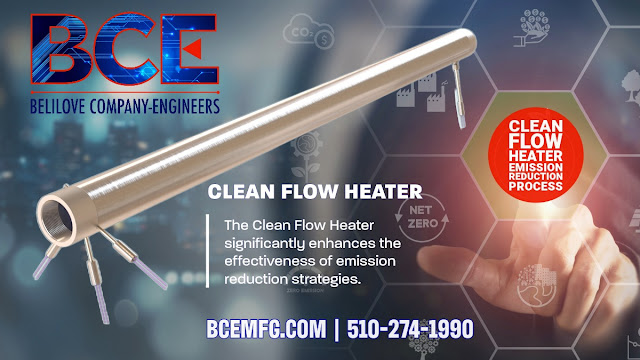
The Clean Flow Heater by BCE is an advanced air circulation heater that provides precise temperature control and uniform heating and ensures efficient combustion of organic materials, which is crucial to reducing waste volume and destroying harmful organic compounds. The precision and uniformity of heating also help to optimize the performance of pollution control devices, such as catalytic converters and selective catalytic reduction units, which are essential for mitigating emissions of harmful gases like nitrogen oxides, carbon monoxide, and volatile organic compounds.

Advantages of Electric Heating


Electric heating elements, like the Clean Flow Heater, offer several advantages over traditional fossil fuel-based heating systems:
  • They provide precise temperature control, which is crucial for catalytic conversion and selective catalytic reduction.
  • Electric heating is often more energy-efficient than burning fossil fuels for heat.
  • Electric heating elements can be designed to fit into various pieces of equipment and can be easily controlled to provide the required heat.
  • Using electricity for heating can result in lower emissions of pollutants, mainly if the electricity is generated from renewable sources.

While the Clean Flow Heater is a critical component in the fight against air pollution and emissions, it is part of a more extensive system that includes various equipment and processes, such as incinerators, regenerative thermal oxidizers, catalytic converters, and selective catalytic reduction units. These systems work together to efficiently combust organic materials, capture pollutants, and convert harmful gases into less toxic substances like carbon dioxide and water vapor. Implementing a holistic approach that combines advanced technologies like the Clean Flow Heater with other pollution control equipment and processes is essential for effectively tackling air pollution and emission reduction.

Innovative technologies like BCE's Clean Flow Heater are playing a pivotal role in the fight against air pollution and the effective management of organic waste. By providing precise temperature control and uniform heating, the Clean Flow Heater helps to optimize the combustion of organic materials and the performance of pollution control devices, which, in turn, contributes to reducing the volume of waste, destroying harmful organic compounds, and mitigating emissions of toxic gases.

BCE
21060 Corsair Blvd. Hayward, CA 94545 
510-274-1990

Compression Fitting Feedthrough: A Versatile Solution for Tube and Thermocouple Feedthroughs

Compression Fitting Feedthrough: A Versatile Solution for Tube and Thermocouple Feedthroughs

Background:

Vacuum chambers often require tube and thermocouple feedthroughs that allow for specific distances during installation. To address this need, we offer a compression fitting solution, empowering our customers with control over the distance in their installations. Through extensive experimentation, we have designed a feedthrough that enables the maximum quantity of 1/8" compression fittings in a standard KF40 and KF50 flange, while still providing enough distance for necessary compression and disassembly.

Scope:
  • Compressible vacuum flange offers the following features:
  • Temperature range: 0°C to +180°C (limited by O-ring's maximum temperature capacity)
  • Material: Stainless steel 304
  • 1/8" compression fitting with a 7/16" hex bored through
  • Compression of any 1/8" diameter tubing or sensor
  • 304 stainless steel KF40 and KF50 flanges
  • He Leak Tested to achieve a leak rate of 1 x 10¯⁸ ATM, CC/sec or better (leak rate after compression depends on the material and wall thickness of the tubing, as well as the strength of compression)
Outcome:

By utilizing a reusable feedthrough, end users can effortlessly introduce new sensors into their systems while maintaining vacuum integrity. These compression fitting feedthroughs provide the flexibility and convenience needed for seamless installations.


BCE

+1 510-274-1990

The Critical Role Vacuum Feedthroughs Play in Industry

The Critical Role Vacuum Feedthroughs Play in Industry

Vacuum feedthroughs are vital in various industries that require maintaining a vacuum environment while transferring materials, data, or energy through the vacuum barrier. Key industries include:


  1. Semiconductor Manufacturing: Vacuum feedthroughs are essential for maintaining a controlled environment while producing integrated circuits, photovoltaic cells, and other semiconductor devices.
  2. Aerospace and Space Research: Vacuum feedthroughs are used in space simulation chambers, vacuum testing of spacecraft components, and satellite testing, ensuring the integrity of the vacuum environment and enabling data and power transmission.
  3. Pharmaceutical and Biotechnology: Vacuum feedthroughs are used in vacuum-based processes such as lyophilization (freeze-drying), vacuum distillation, and sterilization, ensuring the transfer of materials and data without compromising the vacuum environment.
  4. High-Energy Physics Research: Vacuum feedthroughs are crucial in particle accelerators, such as the Large Hadron Collider (LHC), where they allow the transfer of electrical signals, cooling fluids, and other materials while maintaining a high-vacuum environment.
  5. Thin Film Deposition and Surface Science: Vacuum feedthroughs are used in vacuum-based processes like physical vapor deposition (PVD), chemical vapor deposition (CVD), and sputtering to ensure the transfer of materials, data, and power without affecting the vacuum.
  6. Materials Science: Vacuum feedthroughs are used in various material processing techniques, such as vacuum annealing, vacuum brazing, and vacuum sintering.
  7. Electronics and Optoelectronics: Vacuum feedthroughs are essential for maintaining a vacuum environment during the manufacturing and testing various electronic and optoelectronic components, including vacuum tubes, sensors, and detectors.
  8. Nuclear Research and Fusion: Vacuum feedthroughs are used in nuclear research facilities and fusion reactors to transfer data, power, and materials while maintaining a vacuum environment.


These are just a few examples of industries where vacuum feedthroughs play a crucial role, but there are also many other applications. BCE specializes in crafting premium vacuum feedthroughs tailored to various applications and industries. Our expert engineers bring decades of design and development know-how, amassing an invaluable empirical data and insights repository. At BCE, we are eager to accommodate your unique feedthrough needs, ensuring that our custom-designed solutions effectively address your most demanding challenges.


BCE

+1 510-274-1990

Vacuum Heater Platens

Vacuum Heater Platens

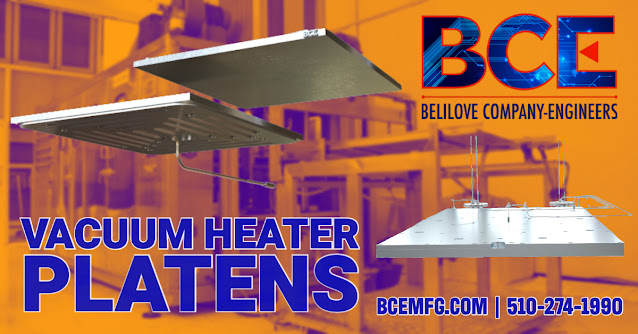
Vacuum heater platens, also known as vacuum heating plates or vacuum hot plates, are heating devices used in various industries for temperature-controlled processing, such as in semiconductor, aerospace, and composite material manufacturing. These devices combine a heating element with a vacuum system to create a controlled environment for processing materials.


Vacuum heater platens typically contain a flat metal plate with integrated heating elements and a vacuum system. The heating elements provide uniform temperature distribution across the surface of the platen, while the vacuum system creates a sealed environment that can maintain specific pressure levels.


These heaters are used for applications that require precise temperature control and a vacuum environment, such as:


  1. Semiconductor manufacturing: Vacuum heater platens are used to heat wafers during various processing stages to ensure uniform temperature distribution and prevent contamination from particles in the air.
  2. Composite material manufacturing: Vacuum heater platens are used in the curing process of composite materials, providing uniform temperature and pressure, which is crucial for achieving optimal material properties.
  3. Aerospace industry: Vacuum heater platens are used for bonding and curing processes of various components, such as carbon fiber composites, in aircraft and spacecraft manufacturing.


Vacuum heater platens help improve product quality and reliability by providing a controlled environment for temperature-sensitive processes.


BCE

+1 510-274-1990

The Role of Vacuum Feedthroughs

The Role of Vacuum Feedthroughs in High Vacuum Applications

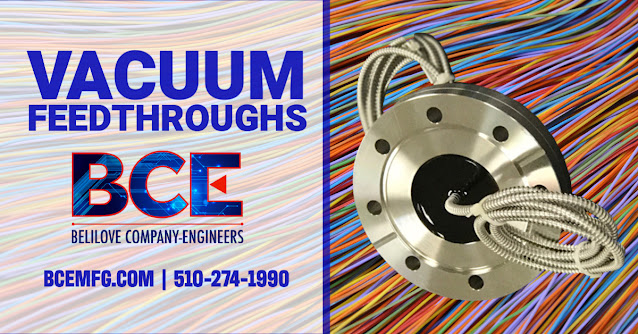
Vacuum feedthroughs are devices that are used to allow electrical, optical, or fluid connections to pass through a vacuum chamber wall. They are essential in high vacuum applications because they allow for the passage of electrical power, control signals, and other types of data into and out of the vacuum chamber while maintaining the integrity of the vacuum.

There are several reasons why vacuum feedthroughs are important in high vacuum applications. First and foremost, they allow for the passage of electrical power and control signals into the vacuum chamber, which is necessary for operating many types of equipment and instruments that are used in high vacuum environments. For example, electrical feedthroughs can be used to power a vacuum pump, while optical feedthroughs can be used to transmit data from sensors or cameras that are located inside the vacuum chamber.

In addition to electrical and optical connections, vacuum feedthroughs can also be used to transport fluids, such as coolants or process gases, into or out of the vacuum chamber. This is particularly important for applications that require temperature control or precise gas delivery, such as in the case of thin film deposition or material processing.

Another important aspect of vacuum feedthroughs is that they can be designed to minimize the amount of outgassing that occurs, which is the release of gas from the feedthrough material into the vacuum chamber. This is important because outgassing can contaminate the vacuum environment, potentially causing damage to the equipment or samples inside the chamber.

Lastly, vacuum feedthroughs must be designed to withstand the high vacuum conditions and operate efficiently and reliably. These feedthroughs typically consist of a metal or ceramic stem with an epoxy, glass or ceramic seal that allows the electrical, optical, or fluid connection to pass through the vacuum chamber wall. The feedthrough stem must be sealed to the vacuum chamber wall without leaking, while the electrical, optical, or fluid connections must maintain their integrity under the high vacuum conditions.

In summary, vacuum feedthroughs play a crucial role in high vacuum applications, by allowing electrical, optical, or fluid connections to pass through the vacuum chamber wall while preserving the high vacuum condition. They also play a important role in controlling temperature, providing gases and maintain the integrity of the electrical, optical and fluid connections.

BCE

+1 510-274-1990

Vacuum Chamber Heater Platen 350mm

Vacuum Chamber Heater Platen 350mm

BACKGROUND 

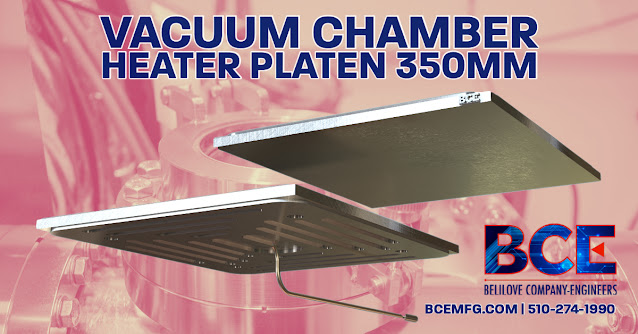
Find a solution in a Vacuum Chamber for the testing and processing of silicon and glass components ~650⁰C.  The heater surface, 350mm x 300mm x 12.7mm thick, was flat with no lift pin holes or gates to hold the product in place.   The long length cold pin section exiting from the center of the heater to the flange, needed to be long enough to exit into the atmosphere.  A slotted designed bottom plate was welded to keep the heat source in place and increase heater efficiency.  

SCOPE

The Vacuum Heater Platen:
  • Temperature 650⁰C-700⁰C  
  • 18” Long cold pin section with CF Vacuum Flange  on the bottom 
  • Helium Leak rate of 1 x 10̄¯9 cc/sec He on CF Flange only 
  • 300mm x 350mm x 12.7mm thick for silicon and glass products 
  • Thermocouple built-in for over-temp protection or control  
  • 2,400  Watt (± 10%) , 240 Volt
  • Mounting threads on the bottom of the assembly  
  • Material:  304 Stainless Steel 
OUTCOME

The Vacuum Heater Platen was ramped to 650⁰C at 75% of power (1800 watt) in atmosphere with a ceramic fiber insulation cover.  After a 1 hour ramp, the heater reached 650⁰ C and was turned off to let cool.    There was discoloration on the top surface, however this is expected in atmosphere at this temperature.  The electrical specifications were checked again and the heater was cleaned & packaged for delivery.  

BCE

+1 510-274-1990

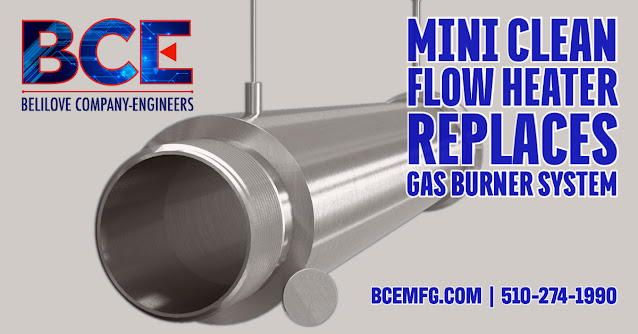
Environmentally Friendly Mini Clean Flow Heater Replaces Gas Burner System

Mini Clean Flow Heater

BACKGROUND

The application involved using environmentally friendly electric heat replacing a gas burner type system.  The engineering request was to conform to a direct replacement 3” stainless tubing while utilizing BCE’s Mini Clean Flow In-line design.  The challenge was building the right inlet and outlet fittings in-line for a seamless change in the air heating process (gas to electric).  Electrically isolated elements in the air stream were required with a high temperature thermocouple assembly near the outlet.

SCOPE

Mini Clean Flow – Hi Wattage needed to satisfy the following:
  • Temperature 482°C to 648°C
  • Internal element must be able to withstand temperature <750°C and be electrically isolated
  • 3” outside diameter, no insulation 
  • A sanitary fitting on the inlet with an NPT on the outlet
  • A cold section on the heat source was required with fiberglass leads  
  • 304 stainless steel material on the heat source and vessel 
  • Type “J” Thermocouple able to withstand high temp at the outlet  
  • 480Volt, 7,000Watt (+/-10%)  

OUTCOME

BCE produced a highly effective Mini Clean Flow heater meeting the delta “T” requirements during the final testing.  We were able to pressure test the part to 90PSI @ 20⁰C-25⁰ without any visible leaks in the weld or braze joints.    A thorough quality inspection was completed on the heater source with final cleaning using isopropyl alcohol and dry air. 


+1 510-274-1990

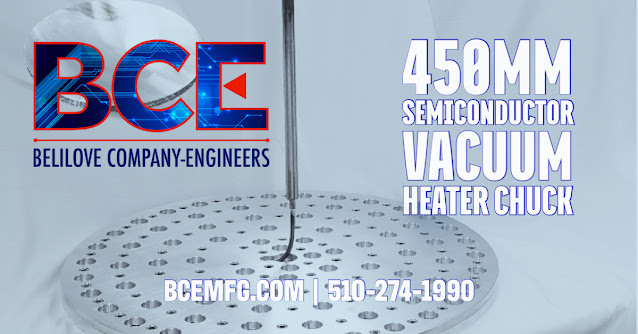
BCE Responds to Chip Shortage with 450mm Vacuum Heater Chuck Design

50mm Vacuum Heater Chuck

BACKGROUND

With the existing chip shortage, an atomic layer deposition (ALD) application up to 360⁰C was the focus of the latest BCE Vacuum Heater Chuck. A compressed assembly was used with many vacuum holes and grooves in the bottom plate to allow the gases to escape during pump down of the vacuum chamber. No surface anodizing was required.

SCOPE

450mm Vacuum Heater Chuck needed to satisfy the following:
  • Temperature <361°C
  • Internal element must be able to withstand temperature <601°C
  • Top surface 16ra
  • A cold section was needed with added thickness for a vacuum fitting
  • 304 Stainless Steel Heat Source
  • 240Volt, 3850Watt (+/-10%)
  • Type “K” Thermocouple was placed near edge (or built-in to heat source)
  • Maximum allowable grooves and holes on the bottom plate to allow any trapped gases to escape

OUTCOME

BCE produced a highly effective vacuum heater which reached an atmospheric temperature of 360°C in under 30 minutes. The reduced mass on the bottom plate provided proper gas elimination with a quicker initial ramp time. Due to this decreased ramp time in atmosphere, a reduced wattage may be an option for the next iteration of the 450mm Vacuum Heater Chuck.


BCE
+1 510-274-1990

150mm 6” Stainless Vacuum Heater Chuck

150mm 6” Stainless Vacuum Heater Chuck

BACKGROUND

An ALD chamber needed to be upgraded to a higher temperature platen, beyond the limits of aluminum.  The application involved reducing the cost of a replacement vacuum heater while keeping the heat transfer and uniformity the same or better in vacuum.  Vacuum integrity was crucial to the success of the project since it needed to comply with the existing vacuum heater chuck being replaced. 

SCOPE

  • 150mm 6” Stainless Vacuum Heater following specs: 
  • Temperature up to 450°C (+/- 1%) 30 minutes or less  
  • 304 SS 2.75 CF Flange Feedthrough with Viton O-ring  
  • 108 mtorr, pass best config. baseline (~0.4 torr/min) 
  • 120 Volt, 950 Watt (+/-10%), 8 Amp 
  • Thermocouple built-in to heater source
  • Surface Finish: 32 Ra 

OUTCOME

  • BCE 6” Vacuum Heater Chuck
  • Medium vacuum compatible
  • Leak-up rate test for the best tool config (~0.4 torr/min).
  • Good temperature uniformity over 6” dia, up-to 450°C.
  • Within ± 2.5°C over most of the wafer, except the edges of a 6” dia.
  • Repeatable and Predictable temperature  ramps up-to 450°C

BCE
510-274-1990

Starwound Cable Heaters

Starwound Cable Heaters

Cable heaters are drawn, elongated, compacted heating elements with the electrical conductor protected inside a metallic sheath with magnesium oxide electrical insulation. Cable heaters are formed straight from round or square tubular stock. Once drawn and compacted, they are used as straight cable in some applications or assembled into various shapes, including star wound or spiral wound patterns. These configurations provide increased surface area, optimal heat transfer, compactness, and a fast heat up and cool down because of their small mass. Alloy 316 stainless steel cable heaters are commonly used in clean environments and where moisture or contaminants are present.

Starwound cable heaters provide optimal heat transfer of fluids (air, gases, liquids), yielding optimal heat distribution. The heater's flexibility allows for winding patterns that distribute power (wattage) precisely as required and generate high temperatures in tight areas. Starwound cable heaters placed inside pipes and ducts create a turbulent flow path, enhancing heat transfer and efficiency.


  • Small diameter, low mass heater allows for fast heat up/cool down.
  • Starwound element creates turbulent flow, resulting in more efficient heating.
  • Sheathed stainless steel element for safely heating clean or impure gas, air, or liquid streams.
  • Broad heater configuration is adaptable to any application.

BCE
510-274-1990

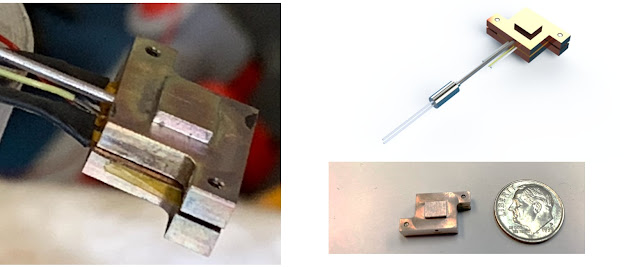
Molybdenum-Copper Stage Heater

Molybdenum-Copper Heater

BACKGROUND

A research and development company approached BCE wanting to heat a 1mm x 1mm x 0.5mm thick component. This was a very sensitive part that needed to be tested to a maximum exposure of 200°C continuous with very precise temperature uniformity for sampling purposes.

SCOPE

Molybdenum-Copper Stage Heater needed to satisfy the following:

  • Temperature <201°C
  • Internal element must be able to withstand temperature <210°C
  • A cold section was not needed
  • Molybdenum-Copper (Moly-Copper) base 65% Moly and 35% Copper
  • 12Volt, 3Watt (Max)
  • Two thermocouple type “K” external
  • M1 threads 

OUTCOME

BCE produced a highly effective assembly which reached the temperature of 200°C in under 1-Minute utilizing only 2.6 watts. Because of the low mass and high conductivity of the copper-moly base, reaching the target temperature and cooling down was highly efficient.

There were two thermocouples which were used to verify the test temperature. One was an exposed bare-bead TC 36 AWG, with the second TC being a 0.062”Ø probe style unit. The M1 threads were challenging, however our process was able to make this happen. 

GET MORE INFORMATION ABOUT THE CUSTOM MOLYBDENUM-COPPER HEATER HERE

Call BCE today for more information.
510-274-1990
https://bcemfg.com

BCE Cartridge Heaters


BCE Cartridge Heaters

BCE manufactures a wide range of cartridge heaters for a variety of industrial applications, and can provide you with heaters manufactured to your exact specifications. Cartridge heater size, sheath, leads, terminals, wattage and voltage can all be adapted to meet your exact needs.

Low to Medium Watt Density Cartridge Heaters

BCE precision cartridge heaters provided localized heat to restricted work areas requiring close thermal control. Dies, platens, and a variety of other types of processing equipment are efficiently heated and can be closely controlled. Part work temperatures of up to 1250ºF are obtained by a combination of heater location and proper wattage output. Basic heater designs are readily adaptable to a wide variety of special requirements, sizes, or ratings. Heating element wires are constructed just beneath outside surface for optimum heat transfer and minimum core temperature, resulting in faster part heating.

The maximum power densities for low to medium watt density cartridge heaters is computed at 60 watts per square inch of heated surface. With proper fit in a heat sink, long life can be expected. Consult BCE for higher watt density applications. Lower watt density will result in longer life. Standard voltages are either 120V or 240V. Other voltages are available.

High Watt Density Cartridge Heaters

The useful life of a Cartridge heating element is determined by how quickly the heat generated in the internal resistance wire can be dissipated to the outside sheath. BCE high watt density cartridge heaters are design and constructed in a way that accelerates the transfer of heat from the resistance wire to the sheath. This is accomplished by relocating the wire so that it is closer to the sheath; and swaging the outside diameter of the heater, thereby compressing the magnesium oxide filler so that it becomes an improved conductor of heat from the wire while maintaining its dielectric properties. By improving the heat transfer rate, it is possible to manufacture elements of higher densities because the differential between the wire temperature and the sheath temperature has been minimized.

Common applications for high watt density cartridge heaters are dies, heat sealing machines, hot melt adhesive equipment, plastic molding machines, platens, and shoe machinery.

Optimizing Performance and Operating Life of High Watt Density Cartridge Heaters

Cartridge Heater Fit

High watt density heaters require careful fit to insure optimum performance and long life.  BCE recommends that installation holes not be drilled and reamed over .002” or larger than the nominal hole size required. 

Cartridge Heater Cycling

Rapid cycling of heaters from very low to very high temperatures shortens their life considerably. It is recommended therefore, that care be taken to compute the correct wattage for any given installation. Optimum wattage should result in a 50/50 off/on cycle.

Location of temperature Sensor and Cartridge Heater

When thermostats are used, the sensing element ought not to be placed further than 1⁄2" away from the heater wherever possible.

For more information about cartridge heaters, call BCE at 510-274-1990 or visit their website at https://bcemfg.com.


New Vacuum Feedthrough Product Designer from BCE

Vacuum Feedthrough Product Designer

BCE, a California based manufacturer of high quality electric heating components and vacuum feedthroughs, is now offering a vacuum feedthrough product designing app on their website, bcemfg.com.

The app allows the visitor to select from an array of options and design their own vacuum feedthrough. Once the design is complete, the visitor can request pricing and delivery from BCE automatically though an integrated email messaging system. The visitor also receives a confirmation of their request.

The vacuum feedthrough designer is the third in a series of online BCE product configuration tools. The three currently available are for cartridge heaters, BCE's Mini Clean Flow air and gas heaters, and now for vacuum feedthroughs.

You can check them out here - https://bcemfg.com/article_277_Product-Designer.cfm

BCE designs and manufactures custom electric heating thermal systems, electrical feedthroughs, pneumatic feedthroughs, and fiber optic feedthroughs. You can learn more about BCE at https://bcemfg.com, or if you have an immediate need, call them at 510-274-1990.

What Are Circulation Heaters?

Circulation HeaterCirculation heaters are the perfect solution for generating heat and enhancing normal immersion heaters performance. They are designed to heat pressurized circulating fluids and to provide effective, controlled heating to water, oil, steam and other gases. Circulation heaters are composed of all-in-one units with a heater mounted inside an insulated tank. They are made of a flanged or a screw plug immersion heater that is inserted into a pressure vessel or a pipe body. Heaters have inlet and outlet piping where the liquid or gas goes through the tank in order to reach the desired temperature.

KEY FEATURES

  • Standard sizes: 1.25” NPT screw plug size to 14” diameter
  • Steel vessels fitted with 150 lb. flanges
  • Thermal insulated vessels
  • Custom unit sizes: up to 44” nominal pipe size
  • Custom-designed to meet your specifications
  • Special sizes, wattages, and materials are available upon request
  • Units are available with larger vessels and heavier flanges
  • Supplied with stainless steel parts and special design terminal boxes use in high temperature conditions

BENEFITS

  • Easy to install
  • Compact
  • Clean
  • Durable
  • Highly energy efficient
  • Provide fast response and even heat distribution
  • Provide greater wattage in a smaller heater bundle
  • Provide maximum dielectric strength
  • Reduce heat loss from the vessel
  • Protect and prevent thermal insulation
  • Easy mounting support
  • Suitable to general purpose terminal enclosures, weather or moisture resistant terminal enclosures, and unsafe or explosion proof locations
  • Compatible with standard industry piping and safety standards
  • Designed and built for safety


FACTORS

Please consider the following factors in order to select the proper circulation heater:
  • Operating temperature
  • Heating element watt density
  • Sheath material (corrosive or non corrosive)
    • Temperature of the corrodent
    • Degree of aeration of exposed corrodent
    • Velocity of the corrodent  

REGISTRATION

Circulation heaters are sometimes considered as boilers or pressure vessels according to the:

  • Heated fluid
  • KW rating
  • Size of vessel
  • Operating pressure
  • Outlet temperature

Where applicable, registration requirements are imposed by law and according to the installation location.

EXTRA FEATURES

  • Available built-in high limit controls and thermostats
  • Standard built-in thermostats: Single pole device limited to 240V up to 30 amps
  • For heater voltage over 240V, or heater currents over 30 amps, or three-phase supply, the thermostat is used for pilot duty only and is not factory wired to the elements.

Please call BCE at 510-274-1990 if you have requirements for circulation heaters. You can also get additional information from the BCE website here.