Showing posts with label aerospace. Show all posts

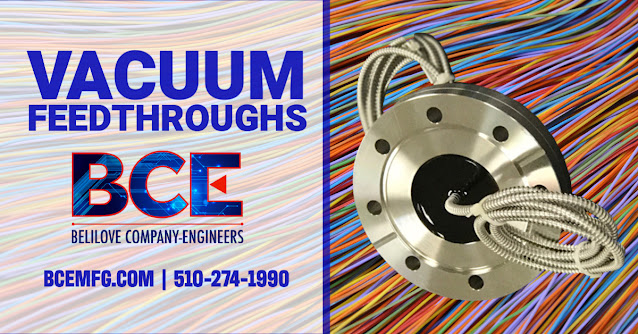
The Critical Role Vacuum Feedthroughs Play in Industry

The Critical Role Vacuum Feedthroughs Play in Industry

Vacuum feedthroughs are vital in various industries that require maintaining a vacuum environment while transferring materials, data, or energy through the vacuum barrier. Key industries include:


  1. Semiconductor Manufacturing: Vacuum feedthroughs are essential for maintaining a controlled environment while producing integrated circuits, photovoltaic cells, and other semiconductor devices.
  2. Aerospace and Space Research: Vacuum feedthroughs are used in space simulation chambers, vacuum testing of spacecraft components, and satellite testing, ensuring the integrity of the vacuum environment and enabling data and power transmission.
  3. Pharmaceutical and Biotechnology: Vacuum feedthroughs are used in vacuum-based processes such as lyophilization (freeze-drying), vacuum distillation, and sterilization, ensuring the transfer of materials and data without compromising the vacuum environment.
  4. High-Energy Physics Research: Vacuum feedthroughs are crucial in particle accelerators, such as the Large Hadron Collider (LHC), where they allow the transfer of electrical signals, cooling fluids, and other materials while maintaining a high-vacuum environment.
  5. Thin Film Deposition and Surface Science: Vacuum feedthroughs are used in vacuum-based processes like physical vapor deposition (PVD), chemical vapor deposition (CVD), and sputtering to ensure the transfer of materials, data, and power without affecting the vacuum.
  6. Materials Science: Vacuum feedthroughs are used in various material processing techniques, such as vacuum annealing, vacuum brazing, and vacuum sintering.
  7. Electronics and Optoelectronics: Vacuum feedthroughs are essential for maintaining a vacuum environment during the manufacturing and testing various electronic and optoelectronic components, including vacuum tubes, sensors, and detectors.
  8. Nuclear Research and Fusion: Vacuum feedthroughs are used in nuclear research facilities and fusion reactors to transfer data, power, and materials while maintaining a vacuum environment.


These are just a few examples of industries where vacuum feedthroughs play a crucial role, but there are also many other applications. BCE specializes in crafting premium vacuum feedthroughs tailored to various applications and industries. Our expert engineers bring decades of design and development know-how, amassing an invaluable empirical data and insights repository. At BCE, we are eager to accommodate your unique feedthrough needs, ensuring that our custom-designed solutions effectively address your most demanding challenges.


BCE

+1 510-274-1990

BCE Vacuum Feedthroughs Allow you to "Take It All Through the Wall"

Vacuum Feedthrough

The development capabilities for vacuum systems and components are continually refined by advances in analytical methods, medical science, and semiconductor manufacturing. The need for process monitoring and control is growing, and it is becoming increasingly difficult to get the necessary power and control signals into vacuum chambers. In order to pass electrical signals, light beams, or pure gases inside a vacuum chamber, devices referred to as vacuum feedthroughs are used. 

Leakage into or through the vacuum feedthrough can not be tolerated as the vacuum seal is essential to preventing leakage and ensuring process integrity. Glass-to-metal and ceramic-to-metal seals, historically the favored technology, are increasingly troublesome - not because of their performance, but because they are limited by size, design, durability, and electro-magnetic shielding choices. Due to this fact, engineers worked with what was available because no suitable alternatives existed. 

Fortunately, new, advanced sealing epoxy compounds were developed that provided exciting opportunities for vacuum feedthrough manufacturers. These new materials opened the door for a more efficient and flexible feedthrough design.

Today's epoxy vacuum feedthroughs have nearly the same application reach as their glass and ceramic cousins in low to medium temperatures. Epoxy vacuum feedthroughs provide an outstanding alternative in terms of customization and versatility for designers and engineers. Shapes, angles, and curves are not a concern. It is possible to use virtually any form of shielded wire or cable. Production in minimal amounts for prototyping and R&D, custom epoxy vacuum feedthroughs can be easily supplied. Modern epoxy feedthroughs sustain a vacuum of up to 10-8 Torr, with continuous temperatures of up to 200 ° C (intermittent 300 ° C), and therefore meet the outgassing criterion of NASA of < 1.0 percent Total Mass Loss (TML). Liquid epoxy's ability to flow and fill spaces thoroughly provides an important additional benefit. In most applications, epoxy feedthrough may be used where a glass-to-metal or ceramic feedthrough is used-the; only notable exceptions are in extremely high-temperature applications or where organic compounds are not authorized. 

Within the restricted world of glass-to-metal and ceramic-to-metal feedthroughs, designers and engineers no longer have to wonder. Epoxy feedthroughs are a modern, exciting player in the game, making them a very enticing option with lower cost, fast prototyping, and more versatile design capability.

For more information about vacuum feedthroughs, contact BCE. Call them at 510-274-1990 or visit their website at https://bcemfg.com.

Custom Electric Heating Elements for Aerospace, Satellites, and Space Exploration

BCE applies specialized know-how in top level design and production to supply electrical heating technologies for applications in the fields of aerospace, satellite communications and space exploration. 

Providing electric heaters to the aerospace, satellite communications, and space exploration industries require pristine accuracy and conformance to exacting specifications. Heating elements must be designed to handle extremes in temperatures, shock and vibration, comply with exacting weight and size requirements, and be capable of operating in vacuum environments - all while still providing fail-proof performance.

BCE has decades of engineering and design experience in developing custom electrical heating elements for these industries. BCE's expertise has been called upon to solve many difficult application challenges unique to these applications, including viscosity control, condensation prevention, freeze protection, as well as air and gas heating.

BCE controls the entire manufacturing cycle including design, production and testing. Their understanding of electric heating technology, and the innovation accumulated along the way, is built upon decades of working closely with customers, meeting their critical requirements. Components and materials are carefully selected according to the customers’ exact specifications, many time turning out to be more than just the heating element itself. Products can be supplied as full assemblies complete with mechanical components, connectors, and sensors with batch sizes from a single piece to large volumes.

Contact BCE with any challenging electrical heating application in the aerospace, satellite communications, and space exploration field. You'll be glad you did.

BCE
https://bcemfg.com
510-274-1990


High Temperature 16 Pair Type J Thermocouple Feedthrough

Type J Thermocouple Feedthrough
16 Pair, High Temp Type J Thermocouple Feedthrough
BACKGROUND

A 3D Printer company specializing in Aerospace parts provided BCE a challenge in creating a High Temperature Feedthrough for their new composite 3D printer.  The 3-D composite company needed a high enough temperature in the sealed area with a vacuum chamber being essential in printing aircraft components.  They had difficulties integrating their existing thermocouple design into their expanded chamber with an off the shelf feedthrough.

SCOPE

The 16 (32-wire) Pair Thermocouple feedthrough needed to satisfy the following:
  • Operating temperatures between -25 C to 300 C
  • Low vacuum leak rate of 10^-9 ATM-CC/S or better
  • Able to withstand a 450 C Bake-out temperature
  • Type J thermocouples (customer preference) with ring terminations 
  • Fiberglass lead wires to withstand the high temperature
OUTCOME

BCE successfully designed a Thermocouple Feedthrough with a type J T/C extension wire so that the customer could integrate the component with ease into their 3D Printer. The High Temperature Feedthrough went through extensive pressure and temperature cycling before being shipped.  One final helium leak check was made and a polarity verification for all connectors was done too.

For more information, contact BCE by calling 510-274-1990 or by visiting https://bcemfg.com

Custom Coiled Cable Immersion Heater with Thermocouple and Thermal Cutout

Custom Coiled Immersion Heater
BCE Custom Coiled Immersion Heater
with thermocouple and thermal cutout.
A major US Aerospace company approached BCE in need of a custom heating solution.  

Their existing heating element failed to evenly distribute heat inside a water reservoir, leading to thermal stratification and hotspots. 

Additionally, while the customer's existing thermal system included temperature limiting devices, the new heater design required it's own thermal cut-out to ensure over-temperature protection and remove any possibility of a runaway condition.

The coiled immersion heater needed to satisfy the following:
  • Temperature uniformity throughout the heated section (± 3 C)
  • Hermetic seal 
  • Over-temperature heater failure
  • Thermocouple for additional temperature measurement
  • 275 Watt, 115 Volt
OUTCOME

Click for larger view.
BCE designed a highly effective coiled heater with exceptional heat uniformity.  An additional
thermocouple was welded to the sheath of the heater to ensure accurate temperature measurement. A thermal cutout was placed into the NPT bushing and potted with thermally conductive epoxy to allow for heater failure if all other safety systems fail. 

BCE was able to design, create 3D models/ drawings, and provide the custom heating elements within a 3 week timeframe.

Contact BCE:
510-274-1990

Thermal Solutions Designed for Aerospace

Advanced electric heating elements and thermal systems designed and manufactured for application-specific requirements in the harsh operating environment of outer space.

Experience, precision, and reliability. BCE.

http://heater.belilove.com | (510) 274-1990

Custom Electric Heating Elements

BCE designs and manufactures custom engineered heating solutions for analytical instrumentation, semiconductor, photovoltaic (solar), medical equipment, plastics processing, foodservice equipment, packaging, aerospace and many other industries.

Visit http://heater.belilove.com or call (510) 274-1990.

Engineered Ceramics for the Analytical, Semiconductor, Electronics, Defense, Medical, and Aerospace Industries

advanced ceramics machining
Advanced ceramics machining
Ceramics are inorganic, non-metallic materials made from compounds of a metal and a non-metal. They include such compounds as oxides, nitrides, and carbides. Ceramics are typically insulators (electrically and thermally), but their properties can vary widely - for instance some ceramics actually belong to the super-conductor class. Advanced ceramics, such as alumina, zirconia, silicone carbide and silicone nitride are very resistant to corrosive chemicals and high temperatures. They posses higher stiffness and lower fracture toughness than metals.

Ceramics behavior under mechanical, thermal and chemical stress differs widely from other materials such as metals, which makes machining ceramics very difficult and requires knowledge, experience, equipment, and expertise. As the need for higher performance / higher precision parts has increased, advances in ceramics machining has overcome many of yesterdays machining challenges, and today's high-tech processes are yielding extremely close tolerance parts and ultra precise shapes.

Ceramic machining is the process of shaping the advanced ceramic material into high precision parts used in industry. Machining removes unwanted material by mechanical means, using very hard abrasive particles. If the machining is done before sintering (to achieve a "near-net-shape" to save time and money), the ceramic is referred to as in the "green state". Green state machining offers considerable advantages in quality, lower production costs, and manufacturing flexibility.

Grinding, the material removal process where abrasives is used, is the most prevalent machining process for advanced ceramics. Polycrystalline diamond and cubic boron nitride are the grinding materials of choice because of their hardness. Their particles are fixed to a grinding tool (or wheel) via resin or vitreous bonding, and are turned against the ceramic part at high speeds. Variation in grinding efficiency is a challenge though, due to the constant changing state of the grinding tools because of wear and abrasion.

The following chart is a helpful reference guide to the properties of some common advanced ceramics (click on chart for larger view).
For any inquiry on precision machined ceramics or thick film ceramic heaters, contact BCE at:

21060 Corsair Blvd
Hayward, CA 94545
Phone: (510) 274-1990
Fax: (510) 274-1999
www.belilove.com
E-mail: sales@belilove.com