 |
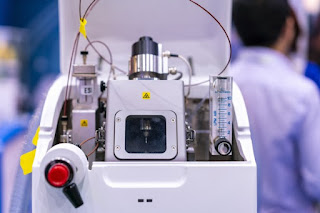
| OEMs can no get a feedthrough to fit their design criteria. |
Scientists and researchers are constantly challenged to come up with better ways to read data in a vacuum environment. Traditional ceramic and glass-to-metal vacuum feedthroughs do not offer design flexibility. Unique control and data signals must pass through the wall. In addition to passing electrical power and control signals, fiber optic cables and pneumatic tubing may be included. Always changing variables, such as the number and types of connectors, unique geometries, and limited available space, make finding an off-the-shelf feedthrough difficult. This has traditionally forced designers to compromise and specify a feedthrough with some, but not all, of the desired specifications.
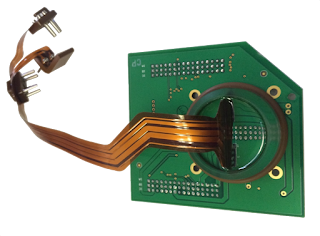 |
| Clear epoxy feedthrough with ribbon connector. |
This reality has led to significant development gains in custom epoxy feedthrough.
Epoxy feedthroughs overcome design constraints. New epoxy properties rivaling ceramic and glass performance have been developed. High performance, clear epoxy potting opens the door for researchers to specify the exact number and type of wires, optical fiber cables, or any other insert that they require. Epoxy feedthrough manufacturers can provide a virtually limitless variety of wires, cables, or tubes along with the added benefit of fast prototyping and small production runs — perfect for the research and manufacturing community.
 |
| Flanged feedthrough with epoxy potted fiber optic cable. |
With the development of
custom epoxy feedthroughs medical device companies, analyzer manufacturers, laboratories, aerospace companies and other R&D facilities can design their equipment based on optimum size, cost and performance, and not be forced to compromise by the limitations of ceramic and glass-to-metal feedthrough. Because of the constant pressure on "better, faster, smaller" vacuum equipment researchers and OEM designers, it's clear that epoxy feedthroughs provide flexibility and options for more efficient and creative design.
For information on epoxy vacuum feedthroughs, contact:
BCE
(510) 274-1990


