Showing posts with label feedthrough. Show all posts

Feedthroughs Used for Penetration of Vacuum and Pressure Vessels

Many types of OEM equipment, including medical, analytical, semiconductor, aerospace and laboratory test equipment, require a leak-proof penetration into a vacuum or pressure chamber. The device that accommodates this penetration is referred to as a feedthrough (sometimes spelled "feedthru"). For the most part feedthroughs allow electrical currents or voltages into the vacuum or pressurized area. There are also many other non-electrical requirements for pressure/vacuum vessel penetration. Some examples of non-electrical penetrations are fiber-optic, fluid tubing bundles, and process control sensors such as thermocouples.

Multi-pin Threaded or Flanged FeedthroughsMulti-pin Threaded or Flanged Feedthroughs

Multi-pin feedthroughs have circular flanged or threaded connectors for moderate pin density. They are typically offered with differing numbers of pins (often, 3, 5 or 7) and rated to 3.5 amps and 500 volts per pin. There are both single-ended and double-ended versions which offer a connector for the air side or both air and vacuum side connectors respectively.
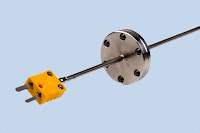
Thermocouple FeedthroughsThermocouple Feedthroughs

A thermocouple feedthrough is an electrical vacuum feedthrough commonly used for systems involved in temperature measurement. The thermocouple feedthrough itself doesn’t measure temperature, but is used to conduct the voltage signal from the vacuum to an external device. These are suitable for use in ultra-high vacuum applications.
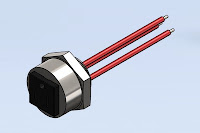
High Power FeedthroughsHigh Power Feedthroughs

High power electrical feedthroughs transmit high current and/or high voltage into a vacuum system. Variations of power electrical feedthroughs offer a range of current and voltage.

Epoxy Potted Feedthroughs
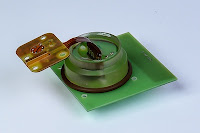

Epoxy vacuum feedthroughs offer the best application flexibility, they are cost competitive, and they have a high vacuum performance for today’s fast moving markets. Clear epoxy feedthroughs allow for the visual inspection of your components. They are board mountable with high vacuum performance and very competitive pricing compared to ceramic and metal seals.
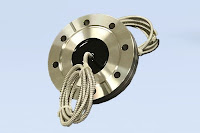
Fiber Optic FeedthroughsFiber Optic Feedthroughs

Fiber Optic Feedthroughs provide the interface between fiber optics and UHV technology. They allow fiber optic cables are designed for vacuum applications requiring fiber optic connections from inside a vacuum system to external equipment.
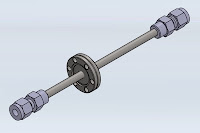
Fluid FeedthroughsFluid Feedthroughs

Also referred to as fluid feedthroughs, they are designed for the transmission of gases or coolants into high and ultrahigh vacuum environments.  Generally constructed from 300 series stainless steel, they are available in single or multi-tube configurations.

Many accessories are available to be used in conjunction with the wide variety of vacuum feedthroughs. These included vacuum connectors, connectors, insulated wire, cable assemblies, insulators, and spacers, just to name a few.

Specialized feedthroughs may be needed if your application includes cryogenic or very low temperatures, high temperatures, aggressive chemicals, or high pressure. Contact an experienced manufacturer who specializes in vacuum feedthroughs to discuss which feedthrough will best meet your needs. A company worth their salt should be able to discern which would be the best fit with minimal hassle.

BCE’s Optic Cable Feedthru: The Source For Accurate Spectrometer Data Collection

Optic Cable Feedthru
BCE Optic Cable Feedthru
Collecting data from a spectrometer has always presented unique challenges. Now, couple that with data collection in an ultra-high vacuum environment and intermittent pressures. This is precisely what a leading national laboratory focusing on American defense asked BCE to supply. This client was concerned with data collection across an ultra-high vacuum chamber using a unique feedthrough that would be easy to install, prevent damage to expensive equipment, and maintain employee safety.

SCOPE


The feedthrough needed to meet the following specifications:
  • Ultra-high vacuum compatible to 1X10⁻⁹ cc/sec of He @ 1 ATM 
  • Ease of installation into vacuum chamber wall 
  • Offer a high coupling efficiency into spectrometer 
  • Compatible connection with computing devices 
  • Remain operable under 100 psi of static pressure 
  • Be able to sustain pressures ranging from 500 to 1000 psi 
  • Adapt quickly, within milliseconds, to varying pressures 
  • Fit easily into restricted spaces 
  • Prevent release of contaminants via outgassing 
OUTCOME
BCE proposed its Optic Cable feedthrough as the ultimate solution to this design conundrum. The flexible stainless steel conduit of the fiber optic cable along with its connectors coupled easily with the spectrometer and company devices. The CF flange of the feedthrough mounted effortlessly into the vacuum chamber wall and BCE’s proprietary epoxy seal meeting NASA ASTM E595 allowed for less than 0.1% of volatiles to emanate into the environment and with less than 1% of mass loss. Further testing of BCE’s optic cable feedthrough at the client facility revealed that it remained operable at varied, high pressures while ensuring an ultra-high vacuum seal.

9 Pin Vacuum Feedthrough

Nine pin circular feedthroughs (often called instrumentation feedthroughs) are commonly used for the transmission of low power electrical signals. They are designed for applications where typical Subminiature Type-D connections will not fit, or where there is little space. The circular geometry allows the installation of this feedthrough into very small vacuum flanges. They are often used in instrumentation applications such as semiconductor processing, electron microscopy, and a variety of analyzers.

Nine Berrylium-Copper alloy contacts, Gold plated per ASTM B488-01, are sealed and electrically insulated in a 304 stainless steel shell using the latest in ceramic bonding technology. Multiple contact configurations are available.

Specifications:
  • Leak Rate: 2X10 - 10  CC/Sec HE At One Atmosphere
  • Laser Welded Assembly
  • Hermetic Ceramic Seal for Contacts
  • Temperature Rating: -65°C To 300°C
  • Voltage: 750 AC RMS
  • Current: 7 Amps
  • Compact, Fits Easily into Complex Assemblies
  • Adapts to Different Signals
  • Mating UHV Connectors and Cables Available
For more information, visit http://www.belilove.com/feedthrough.

New BCE Expoxy Vacuum Feedthrough Video

Check it out ....

Epoxy Vacuum Feedthroughs for Medical Equipment, Analyzers, and R&D Laboratories

epoxy feedthrough
The challenges of getting data and
control sensors inside
vacuum equipment.
Scientists and researchers are continually challenged to come up with better ways to read data inside a vacuum environment. Traditional ceramic and glass-to-metal vacuum feedthroughs don’t offer the flexibility of design required. Unique varieties of control and data signals have to pass through the wall. Not only are electrical power and control signals being passed, but fiber optic cables and pneumatic tubing may be included. Ever changing variables, such as the number and types of connectors, unique geometries, and limited available space, make it very difficult to find an off-the-shelf feedthrough. As a result, designers have traditionally been forced to make compromises and specify a feedthrough with some, but not all, of the desired specifications.

custom epoxy feedthrough
Custom epoxy feedthrough by BCE
This reality has led to significant gains in custom epoxy feedthrough development. Epoxy feedthroughs overcome design restrictions. New epoxy properties have been developed that rival ceramic and glass in performance. High performance, clear epoxy potting opens the door for researchers to specify the exact number and type of wires, fiber optic cables, or any other insert they require.

Manufacturers of epoxy feedthroughs can provide a virtually limitless variety of wires, cables, or tubes along with the added benefit of fast prototyping and small production runs - perfect for the research and manufacturing community.

Epoxy vacuum feedthroughs are quickly becoming the preferred vacuum entry device because:
  • Can accommodate custom conductors, angles, and shapes.
  • Prototypes with the exact number and type of have fiber-optic cables, pneumatic tubing, or run wires.
  • Electrical shielding is not a problem.
  • Epoxy feedthroughs are cost-effective.
  • Comply with outgassing specifications.
  • Allow for visual inspection when clear epoxy used.
  • Feedthroughs can be mounted directly to flexible circuits and printed circuit boards.
  • Elimination of contact resistance.
With the development of epoxy feedthroughs medical device companies, analyzer manufacturers, laboratories, aerospace companies, and other R&D facilities can design their equipment based on optimal size, cost and performance, and not be forced to compromise by ceramic and glass-to-metal feedthroughs limitations.

Because of the constant pressure on vacuum equipment researchers and OEM designers for “better, faster, smaller”, it’s clear that epoxy feedthroughs provide flexibility and options which allow for more efficient and creative design.

For more information regarding epoxy vacuum feedthroughs, contact:
BCE
www.belilove.com
(510) 274-1990

Epoxy Vacuum Feedthroughs for Electrical and Fiber Optic Applications

epoxy vacuum feedthroughs
Epoxy vacuum feedthroughs
provide faster prototyping and
meet customer needs.
More and more OEMs and research facilities are turning to epoxy feedthroughs for their vacuum chamber challenges. New epoxies are available that rival glass and ceramic feedthroughs in performance. Faster prototyping, and lower short-run costs are making epoxy feedthroughs very attractive.

Ceramic and glass-to-metal feedthroughs typically are not available in the exact form required by scientific researchers and equipment manufacturers. There is a tendency to settle or accept off-the-shelf feedthroughs as a compromise, thinking that custom ceramic or glass feedthroughs in small quantities would break the bank, not to mention take forever to deliver. Not true.

epoxy feedthrough
Epoxy feedthrough
Today’s epoxy vacuum feedthroughs make prototyping and manufacturing easier, with higher production output and lower overall costs. Here are some of the features that make this true:
  • Custom conductors, angles, and shapes are not a problem
  • Prototype designs can be provided with fiber-optic cables, pneumatic tubing, and wires (with or without shielding)
  • Compared to ceramic or glass, custom epoxy feedthroughs are cost-effective
  • Feedthroughs comply with NASA outgassing specs
  • Visual inspection is possible because of the clear epoxy used
  • The feedthroughs can be mounted directly to flex-circuits and printed circuit boards
  • Tighter specification can be achieved because contact resistance and voltage drop is eliminated

Epoxy vacuum feedthroughs come custom built to your unique specifications and ensure your equipment performs to the level you specify, so it's important to work with an experienced, capable manufacturer of epoxy feedthroughs. In today’s ultra-competitive marketplace, working with the right partner can mean the difference between success and failure. Manufacturer’s are constantly looking smaller, more compact parts, with faster deliveries and lower costs. Pick a vendor for your vacuum feedthroughs that understands this and has the in-house technology and processes to keep you ahead of the curve.

For more information on epoxy vacuum feedthroughs, contact:
BCE
(510) 274-1990

Custom Epoxy Vacuum Feedthroughs

THE NEED
Equipment manufacturers and scientific researchers are continually challenged with supplying power, fiber-optic, control, and monitoring cables through sealed vacuum vessels. Whether due to space restrictions, special geometries, or number and type of conductors, standard glass-to-metal or ceramic feedthroughs never quite fit the bill. Unfortunately, because of limited options, many designers are forced to compromise and go for an off-the-shelf solution.

THE SOLUTION 

During the past decade, new epoxy compounds have been developed that rival glass and ceramic in performance. With modern epoxy feedthroughs, any kind of standard or custom connector is sealed in a completely potted, high-performance, clear epoxy compound. Epoxy seals offer countless design options, and most amazingly, performance equal to or better than glass or ceramic. Better yet, pricing is very competitive and quick turn-around for prototypes and short production runs are not a problem.

Custom Epoxy Vacuum Feed Throughs Take It All Through The Wall

custom epoxy feedthrough
Take it all through the wall!
Equipment manufacturers and scientific researchers are continually challenged with supplying power, fiber-optic, control, and monitoring cables into (and out of) sealed vacuum vessels. Whether due to space restrictions, special geometries, or number and type of conductors, standard glass-to-metal or ceramic feedthroughs never quite fit the bill. Unfortunately, because of limited options, many designers are forced to compromise and go for an off-the-shelf solution.

Epoxy to the rescue. During the past decade, new epoxy compounds have been developed that rival glass and ceramic in performance. BCE is at the forefront of this development and leverages modern epoxy's unique properties to solve your feedthrough challenges.


For more information visit www.belilove.com/feedthrough.

Involved with Materials and Vacuum? Know the AVS? Check Out Their 2015 Symposium & Exhibition

AVS.org
In 1953, a group of professionals met in 1953 in New York City to discuss high vacuum applications and problems. In 1957 the group formally named itself the Advanced Vacuum Society (www.avs.org) and has since then grown into multiple technical divisions and technical groups that encompass a range of established as well as emerging science and technology areas.

Today, the AVS is self-described as " .. an interdisciplinary, professional Society, AVS supports networking among academic, industrial, government, and consulting professionals involved in a variety of disciplines - chemistry, physics, biology, mathematics, all engineering disciplines, business, sales, etc. through common interests related to the basic science, technology development, and commercialization of materials, interfaces, and processing area."

Each year they hold their International Symposium & Exhibition that draws over 3000 people. This year the 62nd International Symposium & Exhibition is being held on October 18 through 23 at the San Jose Convention Center. You can learn more about it here.

For anyone involved in material science, or vacuum technologies, its an excellent organization to join. BCE is proud to support the AVS, and will be exhibiting products unique to this group, namely: custom board mountable vacuum feedthroughs for quick turn prototypes, custom heater assemblies, controllers, sensors, ceramic metallization, and precision laser machining and drilling for difficult applications. If you visit the exhibition, please stop by and visit us at booth 914.

Choose the Best Type of Vacuum Feedthrough for Your Application

Vacuum Feedthroughs
An electrical vacuum feedthrough (sometimes spelled "vacuum feedthru") is used to transfer electrical signals,  currents, or voltages into a vacuum. Because of the wide variety of feedthroughs, there are numerous categories available to meet the various needs provided by vacuum feedthroughs.

Multi-pin feedthroughs have circular threaded connectors for moderate pin density. They are typically offered with differing numbers of pins (often, 3, 5 or 7) and rated to 3.5 amps and 500 volts per pin. There are both single-ended and double-ended versions which offer a connector for the air side or both air and vacuum side connectors respectively.

Vacuum Feedthroughs
Epoxy Vacuum Feedthrough
custom manufactured by BCE
A thermocouple feedthrough is an electrical vacuum feedthrough commonly used for systems involved in temperature measurement. The thermocouple feedthrough itself doesn’t measure temperature, but is used to conduct the voltage signal from the vacuum to an external device. These are suitable for use in ultra-high vacuum applications. 

Power electrical feedthroughs transmit high current and/or high voltage into a vacuum system. Variations of power electrical feedthroughs offer a range of current and voltage.

Epoxy vacuum feedthroughs offer the best application flexibility, they are cost competitive, and they have a high vacuum performance for today’s fast moving markets. Clear epoxy feedthroughs allow for the visual inspection of your components. They are board mountable with high vacuum performance and very competitive pricing compared to ceramic and metal seals.

Many accessories are available to be used in conjunction with the wide variety of vacuum feedthroughs. These included vacuum connectors, connectors, insulated wire, cable assemblies, insulators, and spacers, just to name a few.

Specialized feedthroughs may be needed if your application includes cryogenic or very low temperatures, high temperatures, aggressive chemicals, or high pressure. Contact an experienced manufacturer who specializes in vacuum feedthroughs to discuss which feedthrough will best meet your needs. A company worth their salt should be able to discern which would be the best fit with minimal hassle.

Visit this link for more information on electrical vacuum feedthroughs.


Advantages of Epoxy Electrical Feedthroughs Over Glass-to-Metal and Ceramic Seals

epoxy vacuum feedthrough
Epoxy Electrical
Vacuum Feedthrough
Advances in semiconductor and medical device development has continually challenged manufacturing processes in ultra-clean environments. Getting power and control signals into high vacuum chambers has always been difficult. The vacuum seal has to be tight and not allow any contamination so that product quality is maintained.

Historically glass-to-metal seals for wire feedthroughs have been the choice in these industries, but are constrained in size, geometry, flexibility and electro-magnetic shielding. At the same time, semiconductor and medical device equipment have an increasing need for higher power, more control, better monitoring, and increased signal shielding. These ever changing requirements, which push the capability of glass-to-metal seals,  open up opportunity for an alternative technology - epoxy electrical vacuum feedthroughs.

Engineered epoxy electrical feedthroughs offer the best of all technologies. Shapes, angles and curves are not a problem. Virtually any kind of shielded wire or cable can be used and still maintain a tight seal. And as equipment design requirements continue to challenge vacuum seals with space and shielding requirements, the advantages of epoxy vacuum seals look to be a promising solution as the technology itself continues to advance.

While glass-to-metal feedthroughs have advantages in high temperature and corrosive applications, many of todays semiconductor and medical device applications don’t see these conditions. In these lower temperature, and non-corrosive applications, the lower cost, easy prototyping and more flexible design capability of epoxy feedthroughs make them very attractive alternatives.

The epoxy's ability to flow and fill spaces completely make it an excellent choice for any special shapes and sizes a vacuum chamber may require for access.  For the most part, epoxy feedthroughs can be used in most applications where glass-to-metal or ceramic feedthroughs are used (with the exception of temperature and corrosion issues outlined above). In some applications, organics are not allowed, and the epoxy feedthrough would be excluded from these as well.

One additional advantage is that custom epoxy vacuum feedthroughs can be quickly provided in very small quantities for prototyping and R&D.

For more information on epoxy feedthroughs, visit this page.

Custom Epoxy Vacuum Feedthroughs - A Great Alternative

custom epoxy feedthrough
Epoxy feedthrough on circuit board
Custom epoxy feedthroughs offer some excellent advantages when compared to ceramic and metal seals and should be considered whenever the need for a high integrity feedthrough is required. Below is a rundown of the advantages and specification for epoxy vacuum feedthroughs: