Showing posts with label epoxy feedthrough. Show all posts

Feedthroughs Used for Penetration of Vacuum and Pressure Vessels

Many types of OEM equipment, including medical, analytical, semiconductor, aerospace and laboratory test equipment, require a leak-proof penetration into a vacuum or pressure chamber. The device that accommodates this penetration is referred to as a feedthrough (sometimes spelled "feedthru"). For the most part feedthroughs allow electrical currents or voltages into the vacuum or pressurized area. There are also many other non-electrical requirements for pressure/vacuum vessel penetration. Some examples of non-electrical penetrations are fiber-optic, fluid tubing bundles, and process control sensors such as thermocouples.

Multi-pin Threaded or Flanged FeedthroughsMulti-pin Threaded or Flanged Feedthroughs

Multi-pin feedthroughs have circular flanged or threaded connectors for moderate pin density. They are typically offered with differing numbers of pins (often, 3, 5 or 7) and rated to 3.5 amps and 500 volts per pin. There are both single-ended and double-ended versions which offer a connector for the air side or both air and vacuum side connectors respectively.
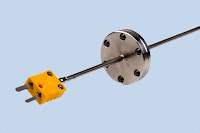
Thermocouple FeedthroughsThermocouple Feedthroughs

A thermocouple feedthrough is an electrical vacuum feedthrough commonly used for systems involved in temperature measurement. The thermocouple feedthrough itself doesn’t measure temperature, but is used to conduct the voltage signal from the vacuum to an external device. These are suitable for use in ultra-high vacuum applications.
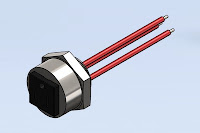
High Power FeedthroughsHigh Power Feedthroughs

High power electrical feedthroughs transmit high current and/or high voltage into a vacuum system. Variations of power electrical feedthroughs offer a range of current and voltage.

Epoxy Potted Feedthroughs
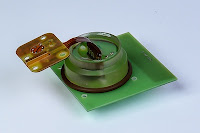

Epoxy vacuum feedthroughs offer the best application flexibility, they are cost competitive, and they have a high vacuum performance for today’s fast moving markets. Clear epoxy feedthroughs allow for the visual inspection of your components. They are board mountable with high vacuum performance and very competitive pricing compared to ceramic and metal seals.
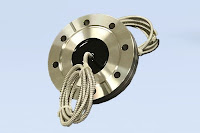
Fiber Optic FeedthroughsFiber Optic Feedthroughs

Fiber Optic Feedthroughs provide the interface between fiber optics and UHV technology. They allow fiber optic cables are designed for vacuum applications requiring fiber optic connections from inside a vacuum system to external equipment.
Fluid FeedthroughsFluid Feedthroughs

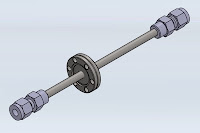
Also referred to as fluid feedthroughs, they are designed for the transmission of gases or coolants into high and ultrahigh vacuum environments.  Generally constructed from 300 series stainless steel, they are available in single or multi-tube configurations.

Many accessories are available to be used in conjunction with the wide variety of vacuum feedthroughs. These included vacuum connectors, connectors, insulated wire, cable assemblies, insulators, and spacers, just to name a few.

Specialized feedthroughs may be needed if your application includes cryogenic or very low temperatures, high temperatures, aggressive chemicals, or high pressure. Contact an experienced manufacturer who specializes in vacuum feedthroughs to discuss which feedthrough will best meet your needs. A company worth their salt should be able to discern which would be the best fit with minimal hassle.

Epoxy Feedthroughs: Fast, Flexible, Affordable

During the past decade, new epoxy compounds have been developed that rival glass and ceramic in performance. BCE is at the forefront of this development.

With modern epoxy feedthroughs, any kind of standard or custom connector is sealed in a completely potted, high-performance, clear epoxy compound. Epoxy seals offer countless design options, and most amazingly, performance equal to or better than glass or ceramic. Better yet, pricing is very competitive and quick turn-around for prototypes and short production runs are not a problem.

FAST PROTOTYPES
BCE can provide custom prototypes for your design with high vacuum performance for today's fast moving markets.

PRINTED CIRCUIT BOARD, FLANGED OR THREADED CONNECTIONS
Wide variety of standard and custom mounting options for epoxy vacuum feedthroughs.

FEWER COMPONENTS, INCREASED RELIABILITY
Fewer components and connectors, often reducing 5 components to 1, BCE epoxy feedthroughs also eliminate multiple potential failure points.

CERTIFIED LOW OUTGASSING
BCE feedthroughs meet NASA outgassing requirements. BCE vacuum leak checks 100% of feedthroughs.

Take it All Through the Wall with Epoxy Vacuum Feedthroughs

glass-to-metal feedthrough
Glass-to-metal feedthrough
Advances in analytical processes, medical research, and semiconductor processing continually refine the manufacturing capabilities for vacuum systems and components. The need to monitor and control processes is increasing, and getting the required power and control signals into vacuum chambers is increasingly difficult. Devices known as vacuum feedthroughs are used to pass electrical signals, light beams, or pure gases inside a vacuum chamber. Leakage through or around the vacuum feedthrough cannot be tolerated as the vacuum seal is critical to preventing contamination and insuring process integrity.

Glass-to-metal and ceramic-to-metal seals, traditionally the preferred technology, are increasingly problematic - not because of their performance, but because they are constrained by size, geometry, flexibility, and electro-magnetic shielding options. Engineers worked within this reality simply because there were no viable alternatives. Fortunately though, new, advanced sealing epoxy compounds were developed that provided exciting opportunities for vacuum feedthrough manufacturers.

Faster, Less Expensive, More Customizable Feedthroughs

Epoxy vacuum feedthrough
Epoxy vacuum feedthrough.

Today's epoxy vacuum feedthroughs provide the virtually the same performance as their glass and ceramic cousins in low to medium temperatures. Epoxy vacuum feedthroughs offer designers and engineers an excellent alternative in terms of customization and specialization. Shapes, angles and curves are not a problem. Virtually any kind of shielded wire or cable can be used. Custom epoxy vacuum feedthroughs can be quickly provided in very small quantities for prototyping and R&D. Modern epoxy feedthroughs maintain a vacuum up to 10-8 Torr, with temperatures up to 200°C continuous (300°C intermittent), and also meet NASA's outgassing requirement of <1.0% Total Mass Loss (TML). Liquid epoxy's ability to flow and fill spaces thoroughly provides it's advantage, and in most applications, an epoxy feedthrough can be used where a glass-to-metal or ceramic feedthrough is used - the only notable exceptions are in very high temperature applications or where organic compounds are not allowed.

Designers and engineers no longer have to think within the constrained world of glass-to-metal and ceramic-to-metal feedthroughs. Epoxy feedthroughs are a new, exciting player in town, and their lower cost, easy prototyping and more flexible design capability make them a very attractive alternative.

For more information, visit https://BCEmfg.com or call BCE at (510) 274-1990

9 Pin Vacuum Feedthrough: UHV Compatible Technology Serving the Semiconductor Industry

Some of the most stringent tolerances and vacuum requirements exist in the ever-expanding semiconductor industry. Tight restrictions in vacuum ports, high temperature applications and exposure to high stress environments further add to the challenge of designing an electrical feedthrough that can be manufactured quickly and installed with ease. An American multinational manufacturer of chips and microprocessors approached BCE with these exact requirements in order to replace their existing vacuum feedthroughs incapable of providing an adequate performance in ultra-high vacuum environments. Furthermore, their existing supplier had long lead times and the procured feedthroughs needed to be replaced often as their contacts would fail due to oxidation formation on the conductive layer.

SCOPE
  • The feedthrough needed to satisfy the following requirements: 
  • Ultra-High Vacuum (UHV) compatibility up to 1 X 10⁻¹⁰ atm.cc/sec 
  • Remain operable at temperatures exceeding 250°C 
  • Pins preventing oxidation of conductive layer for longevity 
  • 9 pin feedthrough configuration 
  • Voltage requirement: 750 AC RMS 
  • Current requirement: 7 AMPS 
  • Quick-turnaround on feedthrough manufacturing 
  • Robust seal withstanding high stress environments 
  • Ease in installation, simple design 
  • Low cost for application 
OUTCOME

All customer requirements were exceeded by BCE’s 9 pin vacuum feedthrough. Not only did it meet all electrical and configuration specifications, it provided a vacuum compatibility twice as much as that required by the customer allowing them to expand their capabilities to higher vacuum thresholds. It also remained operable at higher temperatures, nearing maximums of 300°C. Furthermore, the gold plated pins proved to be ideal in the prevention of oxidative layers inhibiting current flow. Moreover, BCE’s proprietary ceramic seal achieved the desired robustness and allowed the feedthrough to remain operable under high stress conditions. Finally, the client was equally impressed by BCE’s quick-turnaround time and competitive pricing.

Vacuum Technology and Vacuum Design Handbook for Accelerator Technicians

A handbook titled "Vacuum Technology and Vacuum Design Handbook for Accelerator Technicians" published in 2011 and downloaded from the Lawrence Berkeley National Laboratory website, is a compilation of information gathered from over 50 years of direct hands-on experience to applicable information widely available from the vacuum technology industry.
It seeks to address common and specific vacuum technology problems while clarifying the design standards and philosophies adopted for use in the ANSTO accelerator facilities.

BCE Epoxy Vacuum Feedthroughs: When You Need to Pass a Signal Through A Vacuum Chamber Wall


Equipment manufacturers and scientific researchers are continually challenged with supplying power, fiber-optic, control, and monitoring cables into (and out of) sealed vacuum vessels. Whether due to space restrictions, special geometries, or number and type of conductors, standard glass-to-metal or ceramic feedthroughs never quite fit the bill. Unfortunately, because of limited options, many designers are forced to compromise and go for an off-the-shelf solution.

You don't have to compromise anymore.  EPOXY TO THE RESCUE. 

During the past decade, new epoxy compounds have been developed that rival glass and ceramic in performance. BCE is at the forefront of this development and leverages modern epoxy's unique properties to solve your feedthrough challenges.

With modern epoxy feedthroughs, any kind of standard or custom connector is sealed in a completely potted, high-performance, clear epoxy compound. Epoxy seals offer countless design options, and most amazingly, performance equal to or better than glass or ceramic. Better yet, pricing is very competitive and quick turn-around for prototypes and short production runs are not a problem.

BCE custom epoxy vacuum feedthroughs offer the best choice in application flexibility, cost, and high performance. Epoxy feedthroughs are the right product for today’s fast moving markets. If you have to pass an electrical, pneumatic, or fiber-optic signal through a vacuum chamber wall, THINK OF BCE!