The Critical Role Vacuum Feedthroughs Play in Industry

The Critical Role Vacuum Feedthroughs Play in Industry

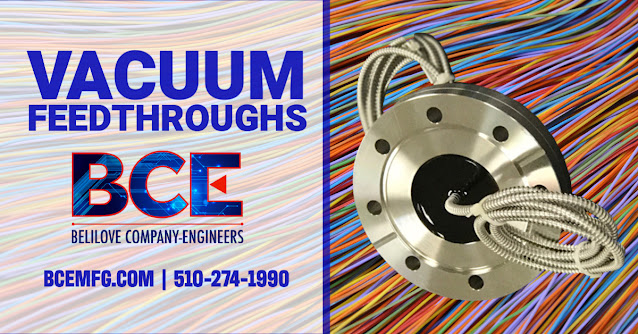
Vacuum feedthroughs are vital in various industries that require maintaining a vacuum environment while transferring materials, data, or energy through the vacuum barrier. Key industries include:


  1. Semiconductor Manufacturing: Vacuum feedthroughs are essential for maintaining a controlled environment while producing integrated circuits, photovoltaic cells, and other semiconductor devices.
  2. Aerospace and Space Research: Vacuum feedthroughs are used in space simulation chambers, vacuum testing of spacecraft components, and satellite testing, ensuring the integrity of the vacuum environment and enabling data and power transmission.
  3. Pharmaceutical and Biotechnology: Vacuum feedthroughs are used in vacuum-based processes such as lyophilization (freeze-drying), vacuum distillation, and sterilization, ensuring the transfer of materials and data without compromising the vacuum environment.
  4. High-Energy Physics Research: Vacuum feedthroughs are crucial in particle accelerators, such as the Large Hadron Collider (LHC), where they allow the transfer of electrical signals, cooling fluids, and other materials while maintaining a high-vacuum environment.
  5. Thin Film Deposition and Surface Science: Vacuum feedthroughs are used in vacuum-based processes like physical vapor deposition (PVD), chemical vapor deposition (CVD), and sputtering to ensure the transfer of materials, data, and power without affecting the vacuum.
  6. Materials Science: Vacuum feedthroughs are used in various material processing techniques, such as vacuum annealing, vacuum brazing, and vacuum sintering.
  7. Electronics and Optoelectronics: Vacuum feedthroughs are essential for maintaining a vacuum environment during the manufacturing and testing various electronic and optoelectronic components, including vacuum tubes, sensors, and detectors.
  8. Nuclear Research and Fusion: Vacuum feedthroughs are used in nuclear research facilities and fusion reactors to transfer data, power, and materials while maintaining a vacuum environment.


These are just a few examples of industries where vacuum feedthroughs play a crucial role, but there are also many other applications. BCE specializes in crafting premium vacuum feedthroughs tailored to various applications and industries. Our expert engineers bring decades of design and development know-how, amassing an invaluable empirical data and insights repository. At BCE, we are eager to accommodate your unique feedthrough needs, ensuring that our custom-designed solutions effectively address your most demanding challenges.


BCE

+1 510-274-1990
Vacuum Heater Platens

Vacuum Heater Platens

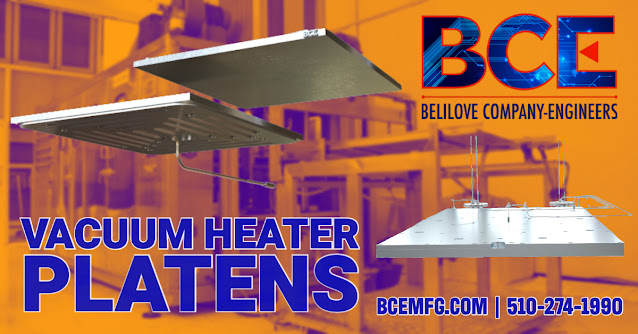
Vacuum heater platens, also known as vacuum heating plates or vacuum hot plates, are heating devices used in various industries for temperature-controlled processing, such as in semiconductor, aerospace, and composite material manufacturing. These devices combine a heating element with a vacuum system to create a controlled environment for processing materials.


Vacuum heater platens typically contain a flat metal plate with integrated heating elements and a vacuum system. The heating elements provide uniform temperature distribution across the surface of the platen, while the vacuum system creates a sealed environment that can maintain specific pressure levels.


These heaters are used for applications that require precise temperature control and a vacuum environment, such as:


  1. Semiconductor manufacturing: Vacuum heater platens are used to heat wafers during various processing stages to ensure uniform temperature distribution and prevent contamination from particles in the air.
  2. Composite material manufacturing: Vacuum heater platens are used in the curing process of composite materials, providing uniform temperature and pressure, which is crucial for achieving optimal material properties.
  3. Aerospace industry: Vacuum heater platens are used for bonding and curing processes of various components, such as carbon fiber composites, in aircraft and spacecraft manufacturing.


Vacuum heater platens help improve product quality and reliability by providing a controlled environment for temperature-sensitive processes.


BCE

+1 510-274-1990

HEM Sealed Heater™ - Bench Test to 250°C

HEM Sealed Heater

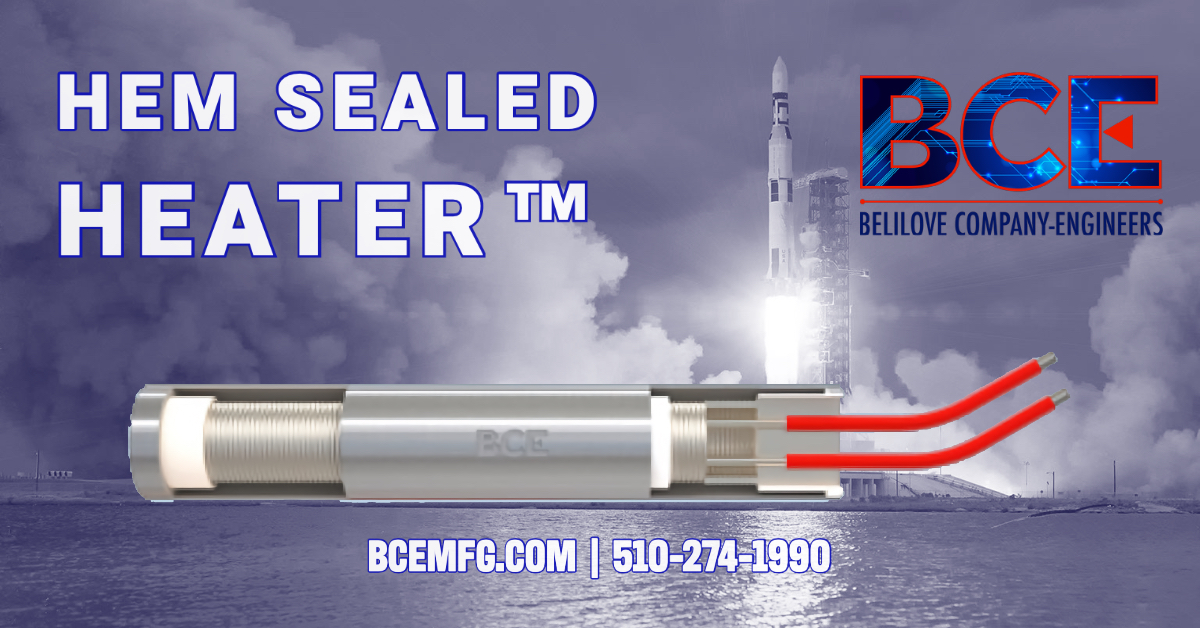
In addition to optimizing liquid flow in space launches, more research and design facilities require a heater that will work in vacuum without outgassing the internal resistor and insulating materials.  Materials such as chromium and particles from the magnesium oxide begin to outgas.  Placing a vacuum barrier that keeps these particles in place and allows the operator to process without consistently replacing heaters, should increase productivity.

HEM Sealed Heater™/ Vacuum Chambers:
  • Temperature range of -55⁰C to +200⁰C Sheath Temperatures
  • Stainless steel 321 for heated zone, 304 Hem Sealed Cap   
  • 18AWG to 32AWG Kapton®/polyimide Lead wires 
  • 500Watt (± 10%) , 240 Volt, 1-phase   
  • He Leak Tested = 5 x 10¯⁹ ATM, CC/sec or better 
  • Hi-Pot Test 1K*2E 1 2 seconds (1500-2250VDC 0.5mA) 
  • Meg-Ohm 20 to 4,000+ @ 500VDC 

OUTCOME:

This test was performed in atmosphere within a 3.5 hour time frame.  The temperature was held each hour after the initial ramp to sheath temperature as noted in the graph below.

The temperature of 200°C was held for the 2nd hour and then the heater was powered ~250°C and held until the test was complete after about 3.5 hours.  

At lower temperatures of ~200°C, the Hem Sealed™ Cap reached 60°C keeping the vacuum integrity as per the maximum heater transition temp of 70°C.  The maximum temperature on the sheath tested was to 250°C with the Hem Sealed™ Cap at 79°C.

Special note; if a heater block or other device being heated, the optimal bore diameter vs heater diameter for the best heat transfer should be +.0020” to +.0025”.


BCE

+1 510-274-1990

The Role of Vacuum Feedthroughs

The Role of Vacuum Feedthroughs in High Vacuum Applications

Vacuum feedthroughs are devices that are used to allow electrical, optical, or fluid connections to pass through a vacuum chamber wall. They are essential in high vacuum applications because they allow for the passage of electrical power, control signals, and other types of data into and out of the vacuum chamber while maintaining the integrity of the vacuum.

There are several reasons why vacuum feedthroughs are important in high vacuum applications. First and foremost, they allow for the passage of electrical power and control signals into the vacuum chamber, which is necessary for operating many types of equipment and instruments that are used in high vacuum environments. For example, electrical feedthroughs can be used to power a vacuum pump, while optical feedthroughs can be used to transmit data from sensors or cameras that are located inside the vacuum chamber.

In addition to electrical and optical connections, vacuum feedthroughs can also be used to transport fluids, such as coolants or process gases, into or out of the vacuum chamber. This is particularly important for applications that require temperature control or precise gas delivery, such as in the case of thin film deposition or material processing.

Another important aspect of vacuum feedthroughs is that they can be designed to minimize the amount of outgassing that occurs, which is the release of gas from the feedthrough material into the vacuum chamber. This is important because outgassing can contaminate the vacuum environment, potentially causing damage to the equipment or samples inside the chamber.

Lastly, vacuum feedthroughs must be designed to withstand the high vacuum conditions and operate efficiently and reliably. These feedthroughs typically consist of a metal or ceramic stem with an epoxy, glass or ceramic seal that allows the electrical, optical, or fluid connection to pass through the vacuum chamber wall. The feedthrough stem must be sealed to the vacuum chamber wall without leaking, while the electrical, optical, or fluid connections must maintain their integrity under the high vacuum conditions.

In summary, vacuum feedthroughs play a crucial role in high vacuum applications, by allowing electrical, optical, or fluid connections to pass through the vacuum chamber wall while preserving the high vacuum condition. They also play a important role in controlling temperature, providing gases and maintain the integrity of the electrical, optical and fluid connections.

BCE

+1 510-274-1990

Happy Holidays from BCE!

Happy Holidays

Semiconductor Processing Chuck Heaters

Semiconductor Processing Chuck Heaters

In semiconductor processing, electric chuck heaters are used to heat the surface of a chuck, which is a device that holds a wafer in place during processing. The chuck is typically made of aluminum or copper and is used to hold the wafer during the various processing steps, such as photolithography, etching, and deposition. The chuck is typically cooled to prevent thermal damage to the wafer during processing, but it must also be heated to maintain a consistent temperature and prevent thermal gradients across the wafer.

The electric chuck heater consists of a heating element, typically made of resistive wire, that is embedded in the chuck. When current is passed through the heating element, it generates heat, which is conducted through the chuck and heats the surface of the chuck. The temperature of the chuck is controlled by adjusting the current flowing through the heating element.

The use of electric chuck heaters in semiconductor processing is important for several reasons. First, it helps to maintain a consistent temperature across the wafer, which is important for maintaining process repeatability and yield. Second, it helps to prevent thermal gradients across the wafer, which can cause warping and other defects. Finally, it can help to prevent contamination of the wafer by preventing condensation on the chuck surface.

BCE

+1 510-274-1990

Happy Thanksgiving from BCE

Happy Thanksgiving from BCE